AI in Stores: Smarter Shopping or a Growing Privacy Risk?
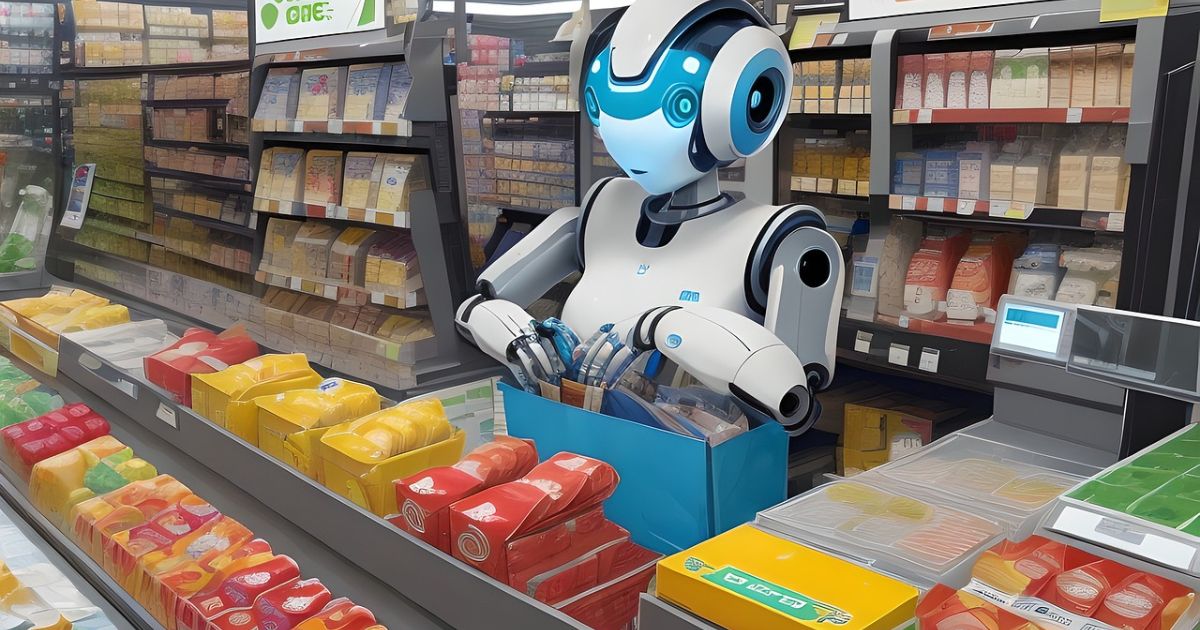
Walk into a modern store today and something subtle happens before you touch a product. Digital screens adapt. Prices quietly shift. Recommendations appear that feel uncannily relevant. You’re not imagining it — artificial intelligence is already working in the background, turning physical and online stores into data-driven environments that respond to you in real time.
AI in retail no longer belongs to the future. It’s embedded in recommendation engines, cashier-less checkouts, smart shelves, facial analytics, and demand-prediction systems that decide what gets stocked — and what doesn’t. For shoppers, this means faster decisions, fewer frustrations, and experiences that feel almost intuitive.
But convenience has a shadow.
The same systems that personalize your shopping journey are also recording it — every click, pause, glance, and purchase feeding algorithms designed to learn more about you than you consciously reveal. In some cases, AI doesn’t wait for behavior to happen; it predicts it. And that raises a critical question modern retail can no longer ignore:
When does intelligent assistance cross into silent surveillance?
Retailers frame AI as a tool for efficiency and customer satisfaction. Privacy advocates see a different story — one where personal data becomes a currency, often traded, analyzed, and monetized beyond what shoppers clearly understand or consent to.
This is the reality of AI-powered retail: a space where frictionless experiences and data extraction coexist. In this article, we examine both sides of the equation — how AI is redefining shopping convenience, and where it risks eroding privacy, autonomy, and trust. Because in the race to build smarter stores, the real challenge isn’t technological — it’s ethical.
🌟 The Promise: How AI Is Transforming Retail for the Better
| 1 | Personalized Shopping Powered by AI AI analyzes customer behavior to offer tailored product suggestions and improve user experience. |
| 2 | AI-Driven Inventory That Thinks Ahead AI predicts demand and manages inventory efficiently, reducing waste and increasing availability. |
| 3 | AI Virtual Assistants in Retail (Beyond Chatbots) Chatbots and virtual agents powered by AI provide round-the-clock customer support. |
| 4 | Dynamic Pricing in AI-Powered Retail AI adjusts prices based on demand, competition, and customer behavior to optimize sales. |
| 5 | AI-Driven Fraud Detection in Retail AI systems help identify fraudulent transactions and protect customer data. |
⚠️ The Peril: Where AI in Retail Crosses the Line
| 6 | Privacy Risks in AI-Powered Retail Stores AI tracks detailed customer behavior, raising concerns about constant surveillance and data overreach. |
| 7 | How Shopper Data Gets Misused in AI-Driven Retail Retailers may sell or exploit personal data beyond what customers knowingly consent to. |
| 8 | When AI Personalization Becomes Manipulation Hyper-personalized ads may cross ethical boundaries, pressuring users into purchases. |
| 9 | Algorithmic Bias in AI-Driven Retail Systems AI may favor certain customer groups over others, leading to unfair pricing or service. |
| 10 | The Risk of Losing the Human Element in AI-Driven Retail Over-reliance on AI may reduce genuine customer service and empathy in retail interactions. |
❓ Frequently Asked Questions About AI in Retail Stores
💡 Conclusion: The Real Test of AI in Retail
Personalized Shopping Powered by AI
There’s a moment in modern retail when a product suggestion feels less like advertising and more like anticipation. You haven’t searched for it. You didn’t ask for it. Yet somehow, it’s exactly what you needed. That moment isn’t luck — it’s AI-driven personalization at work.
AI in stores builds a living profile of shoppers by interpreting signals most people don’t even realize they’re sending. Purchase history is just the starting point. Algorithms also factor in browsing paths, dwell time in front of shelves or screens, response to discounts, and even how preferences change across seasons or locations. The result is a shopping experience that adapts continuously, not one that relies on static assumptions.
Unlike traditional recommendations, AI-powered personalization operates in real time. It can:
- Interpret behavioral patterns instantly, adjusting suggestions as intent shifts
- Surface context-aware recommendations, not just popular products
- Reconfigure digital shelves and displays, highlighting items most likely to convert for that specific shopper
This level of precision has reshaped how retailers think about discovery. Recommendation engines now influence a significant share of purchasing decisions because they reduce friction — fewer irrelevant options, faster confidence, and a sense that the store “understands” the customer.
Personalization doesn’t stop at product suggestions. Loyalty platforms, retail apps, and in-store systems now synchronize preferences across channels — remembering sizes, brands, and buying rhythms while triggering offers that feel timely rather than random. When executed responsibly, this creates an experience that feels intuitive rather than intrusive.
The paradox is striking: the most human-feeling shopping experiences today are often powered by machines. AI doesn’t replace choice — it narrows chaos into clarity. And when personalization is transparent and respectful, it transforms retail from transactional to genuinely responsive.
AI-Driven Inventory That Thinks Ahead
Few things damage customer trust faster than empty shelves. A product out of stock isn’t just a missed sale — it’s a signal that the system failed. This is where AI-powered inventory management quietly reshapes retail, operating less like a database and more like a forecasting engine.
Traditional inventory relies on past averages and manual planning. AI goes further. It continuously models demand by reading thousands of signals at once — transaction velocity, regional buying patterns, weather shifts, promotion performance, and real-world events that influence purchasing behavior before it shows up in sales numbers.
Instead of reacting to demand, AI anticipates it.
That’s how modern inventory systems can:
- Increase availability ahead of demand spikes, not after shelves are empty
- Dynamically rebalance stock across locations, reducing both shortages and dead inventory
- Identify slow-moving products early, allowing smarter markdowns instead of last-minute clearance losses
This predictive capability turns inventory into a responsive network. Stores receive replenishment based on probability, not guesswork. Distribution centers move faster. Supply chains become flexible rather than fragile.
The impact extends beyond revenue. Smarter forecasting means fewer unnecessary shipments, reduced overproduction, and less waste ending up in landfills. When inventory aligns more closely with real demand, logistics become leaner — lowering emissions while improving efficiency.
AI doesn’t just decide what stays on the shelf. It determines when, where, and how much — often before shoppers even realize demand is forming. In that sense, the smartest inventory systems aren’t following the market anymore. They’re reading it in advance.
AI Virtual Assistants in Retail (Beyond Chatbots)
Retail assistance has quietly shifted from counters and call queues to algorithms that respond instantly. Today’s AI-driven virtual assistants aren’t designed to replace staff — they’re built to remove friction at the moments customers value speed most.
In stores, on apps, and across websites, AI assistants now handle the first layer of interaction: answering product questions, checking availability, guiding navigation, and resolving routine issues without delay. Unlike human support, these systems don’t rely on scripts. They learn continuously, improving responses based on real customer interactions.
What sets modern retail AI assistants apart is not availability — it’s consistency and context. They can:
- Deliver immediate, accurate responses without wait times
- Use purchase history and browsing signals to offer relevant suggestions, not random promotions
- Maintain continuity across channels, so conversations don’t reset when customers move from app to store or web
This creates a unified support experience where assistance feels persistent rather than fragmented. A question asked online doesn’t have to be repeated at a kiosk. A recommendation made in an app can reappear in-store, already informed by prior intent.
Retailers have found that virtual assistance works best when paired with human escalation. AI resolves the predictable, repetitive needs. People step in when nuance, judgment, or empathy matters. The result is not cheaper service — it’s smarter service allocation.
For shoppers, the value is time and clarity. For retailers, it’s efficiency without sacrificing experience. And when implemented responsibly, AI assistants stop feeling like automated tools and start functioning as reliable, always-available guides in an increasingly complex retail environment.
Dynamic Pricing in AI-Powered Retail
Prices used to be static. Today, they’re fluid — shaped by algorithms that react faster than any pricing team ever could. Dynamic pricing, once limited to airlines and e-commerce, is now moving into physical stores through AI-driven systems and digital shelf technology.
At its core, AI-powered pricing continuously evaluates market conditions in real time. It weighs demand velocity, competitor pricing, inventory levels, location-based trends, and timing to determine when a price should rise, fall, or hold. The objective isn’t chaos — it’s precision.
When implemented carefully, dynamic pricing enables retailers to:
- Respond instantly to demand shifts, rather than relying on scheduled price changes
- Deploy targeted discounts strategically, clearing excess stock without blanket markdowns
- Automate price updates across stores, reducing operational errors and manual intervention
For shoppers, this can translate into timely deals that align with real market conditions instead of arbitrary sales calendars. For retailers, it protects margins while improving sell-through efficiency.
But dynamic pricing also tests consumer trust. When price changes feel opaque or inconsistent, shoppers question fairness — especially if different customers see different prices for the same product. This is where ethical design becomes critical. Transparency, pricing guardrails, and clear discount logic determine whether dynamic pricing feels intelligent or exploitative.
AI doesn’t decide prices in isolation. Humans set the rules, limits, and intent behind the algorithm. When pricing systems are governed responsibly, they don’t undermine value — they adapt it. And in a retail landscape shaped by speed and volatility, adaptability is no longer optional. It’s competitive survival.
AI-Driven Fraud Detection in Retail
As retail transactions accelerate across digital and physical channels, fraud has become faster, more automated, and harder to detect. Stolen cards, account takeovers, fake returns, and synthetic identities now operate at a scale no human review team can realistically manage. This is where AI has become essential — not optional.
Modern fraud-detection systems don’t rely on fixed rules or manual checks. They evaluate transactions as they happen, comparing each purchase against millions of behavioral signals in milliseconds. Location anomalies, sudden spending spikes, device mismatches, and unusual purchase sequences are assessed instantly — often before a transaction is approved.
AI-powered fraud prevention allows retailers to:
- Monitor transactions continuously, rather than reviewing them after damage occurs
- Detect behavioral deviations, not just known fraud patterns
- Intervene automatically, blocking or flagging high-risk activity in real time
Unlike traditional systems, AI models adapt. Each confirmed fraud attempt strengthens the system, refining its ability to distinguish genuine customers from malicious activity without increasing false declines.
These protections now operate across payment gateways, loyalty programs, e-commerce platforms, and even in-store checkout systems. The result is quieter security — fewer disruptions for legitimate shoppers and faster response to real threats.
Effective fraud prevention does more than reduce financial loss. It protects customer confidence. When shoppers trust that their payments and identities are safeguarded, they engage more freely and return more often. In modern retail, security isn’t visible — but when it fails, it’s instantly felt. AI ensures it fails less often.
Privacy Risks in AI-Powered Retail Stores
Retail surveillance no longer looks like security guards and CCTV cameras. It’s embedded in the environment — operating through sensors, software, and algorithms that observe behavior continuously, often without drawing attention to themselves.
In AI-enabled stores, data collection extends far beyond purchases. Smart cameras analyze movement patterns. Computer vision measures dwell time and product engagement. Online systems track not only what shoppers click, but how long they hesitate, scroll, or abandon a page. When combined, these signals form detailed behavioral profiles that reveal intent, habits, and preferences with increasing accuracy.
This depth of visibility is where privacy concerns begin.
Key risks include:
- Persistent behavioral tracking, where customers are monitored across visits and channels
- Long-term data retention, with unclear limits on how long personal information is stored
- Predictive inference, where algorithms estimate future behavior or emotional state without explicit consent
The issue is not personalization itself — it’s awareness and control. Most shoppers never see the full scope of what is collected, how it’s analyzed, or who ultimately gains access to it. Consent is often buried in broad terms rather than actively chosen.
As AI systems become better at predicting behavior, anonymity in retail quietly erodes. What feels like convenience today can become normalization of constant monitoring tomorrow. Without transparency, clear opt-out mechanisms, and enforceable privacy standards, data-driven retail risks shifting from service optimization to behavioral surveillance.
The unanswered question is no longer whether data is being collected — it’s whether customers have meaningful ownership over how that data is used.
How Shopper Data Gets Misused in AI-Driven Retail
AI-powered retail runs on data — but what happens to that data after it’s collected is rarely visible to the customer. Every transaction, search query, and preference feeds into a growing behavioral profile that extends well beyond a shopping receipt. Over time, this profile becomes predictive, persistent, and commercially valuable.
Retailers often justify this data collection as experience enhancement. In practice, however, shopper data frequently moves through complex ecosystems involving analytics vendors, advertisers, and data partners. Once shared, control becomes fragmented — and accountability becomes harder to trace.
Data misuse typically emerges in three forms:
- Secondary data sharing, where information is passed to third parties for targeting or analysis without clear, informed consent
- Excessive remarketing, where a single interaction triggers prolonged ad exposure across platforms
- Automated profiling, where AI categorizes individuals into behavioral segments that may be inaccurate, biased, or exclusionary
The core issue is not automation — it’s opacity. Consent is often bundled into broad terms that obscure how data is reused, retained, or combined with external datasets. Shoppers agree to convenience without understanding the long-term implications of participation.
Restoring trust requires more than compliance checkboxes. Ethical retail AI demands explicit opt-in choices, data minimization, anonymization where possible, and clear explanations of how personal information influences decisions. Loyalty isn’t built by extracting maximum data — it’s earned by giving customers meaningful control over how their data lives beyond the checkout.
When AI Personalization Becomes Manipulation
Personalization enhances shopping when it reduces effort. It becomes problematic when it starts steering behavior. Modern retail AI doesn’t simply respond to preferences — it models susceptibility, timing, and decision patterns to influence outcomes.
Unlike traditional advertising, AI-driven persuasion operates with precision. Algorithms learn which messages trigger engagement, which moments increase conversion probability, and which emotional cues lower resistance. Exposure isn’t random; it’s calculated. A single product interaction can activate a coordinated sequence across platforms designed to keep the item top-of-mind until a purchase feels inevitable.
This is where ethical boundaries begin to blur.
Common manipulation patterns include:
- Emotion-aware targeting, where ads are delivered during moments of heightened receptivity
- Urgency engineering, using countdowns, scarcity signals, and dynamic offers to bypass deliberation
- Behavioral nudging, where personalized language and historical context are used to apply subtle pressure
While influence has always been part of marketing, AI compresses the distance between intention and action. For certain groups — including younger users and impulsive buyers — this can increase the risk of overspending or post-purchase regret.
Responsible retail AI requires restraint. Clear labeling of sponsored recommendations, limits on repetitive targeting, and user controls over personalization intensity help preserve autonomy. Personalization should support choice, not preempt it.
When algorithms begin shaping decisions before customers have time to form them, personalization stops serving the shopper — and starts directing them.
Algorithmic Bias in AI-Driven Retail Systems
AI is often described as objective, but its decisions are shaped entirely by the data it learns from. In retail, that data reflects real-world behavior — including inequalities, gaps, and historical biases. When these patterns go unchecked, AI systems can unintentionally reinforce unfair outcomes while appearing neutral on the surface.
Bias in retail AI rarely looks explicit. It emerges quietly through optimization. Pricing algorithms may learn that certain customer segments convert at higher prices, while recommendation engines may narrow options based on inferred demographics rather than genuine interest. Over time, efficiency metrics can override fairness considerations.
This bias typically surfaces in three areas:
- Differential pricing, where similar shoppers encounter different prices based on inferred value or location
- Uneven product exposure, with certain groups seeing fewer choices, brands, or promotions
- Service prioritization, where AI-driven support systems favor customers labeled as “high value”
These outcomes are rarely intentional. They are a consequence of models trained on incomplete or skewed datasets — and of success metrics that reward revenue without accounting for equity.
Addressing bias requires active governance, not passive monitoring. Retailers must test algorithms across diverse customer groups, audit outcomes regularly, and intervene when patterns produce systematic disadvantage. Transparency around automated decision-making is essential, not just for compliance, but for trust.
Efficiency alone is not innovation. When retail AI treats fairness as a design requirement — not an afterthought — technology moves beyond optimization and begins to serve its entire customer base responsibly.
The Risk of Losing the Human Element in AI-Driven Retail
Automation brings speed and consistency, but it also changes the tone of retail. As AI takes over more customer-facing tasks, the subtle human elements that shape memorable shopping experiences are becoming less visible.
AI can anticipate needs and resolve transactions efficiently. What it cannot do is read discomfort, respond to frustration with empathy, or build rapport through genuine interaction. The value of a knowledgeable associate, a reassuring conversation during a return, or a familiar face at checkout lies beyond prediction models.
As automation expands, several shifts are becoming noticeable:
- Reduced human interaction, as automated systems handle more touchpoints
- Transaction-first environments, where speed is prioritized over engagement
- Emotion-neutral service, effective for efficiency but limited in understanding nuance
These changes don’t signal failure — they signal imbalance. Technology is not inherently opposed to human connection, but it can unintentionally crowd it out if efficiency becomes the only metric of success.
The most resilient retail models use AI to support people, not sideline them. When machines handle repetitive tasks — inventory checks, price updates, basic queries — human staff gain space to focus on advisory roles, creative problem-solving, and relationship-building.
Retail succeeds not because it is fast, but because it is personal. AI can streamline the journey, but connection gives it meaning. When automation and empathy are designed to coexist, shopping remains efficient without becoming impersonal — and progress feels human, not hollow.
Frequently Asked Questions About AI in Retail Stores
1. How is AI personalizing the shopping experience in modern stores?
AI analyzes shopper behavior, purchase history, and browsing patterns to recommend products, optimize store layouts, and tailor promotions, creating a seamless, custom shopping experience.
2. Can AI in stores really predict what I want before I know it?
Yes. By studying millions of shopper interactions, AI can anticipate needs and suggest items before you consciously decide, blending convenience with predictive analytics.
3. What are the privacy risks of AI in retail?
AI tracks movements, purchases, and even attention in stores. Without transparency and safeguards, this data can be misused, leading to surveillance concerns or unwanted profiling.
4. How does AI in retail affect pricing and promotions?
AI enables dynamic pricing that adjusts in real time based on demand, competition, and shopper behavior. While it improves efficiency and personalization, it raises ethical questions about fairness and transparency.
5. Can AI in stores manipulate customer behavior?
Yes. AI can influence decisions through targeted recommendations, emotional triggers, and urgency cues. Ethical design is key to ensure personalization helps, not pressures, shoppers.
6. How does AI impact human interaction in retail?
AI handles routine tasks, freeing staff for complex interactions. However, overreliance on AI can reduce personal connection and empathy, so balance is essential.
7. Is AI in retail biased or unfair?
Bias occurs when AI learns from incomplete or skewed data, potentially resulting in unequal pricing, recommendations, or service. Regular audits and diverse datasets help maintain fairness.
8. How can stores use AI responsibly without invading privacy?
Responsible AI combines transparency, consent, anonymized data, and human oversight, ensuring technology enhances convenience without exploiting shoppers or compromising trust.
Conclusion: The Real Test of AI in Retail
Artificial intelligence has fundamentally altered how retail operates. Stores are faster, supply chains are sharper, pricing is more adaptive, and shopping journeys are increasingly personalized. From recommendation systems to fraud prevention and inventory forecasting, AI in retail has delivered measurable efficiency gains that are now embedded in everyday commerce.
But efficiency alone is not progress.
The same systems that streamline shopping also collect, interpret, and act on vast amounts of personal data — often beyond the shopper’s awareness. Behavioral profiling, predictive targeting, and automated decision-making introduce risks that extend beyond privacy into fairness, autonomy, and trust. When convenience is built on opacity, innovation begins to carry unintended costs.
The future of retail does not require choosing between intelligence and humanity. It requires designing AI with clear boundaries — transparent data practices, ethical safeguards, and human oversight that ensures technology serves people rather than silently steering them. Algorithms should support choice, not preempt it. Automation should amplify human value, not erase it.
Retail has always been about more than transactions. It is about confidence, connection, and trust built over repeated interactions. AI can enhance these elements — but only when it is governed with intention.
The real measure of success isn’t how smart stores become, but how responsibly that intelligence is used.
🔑 Key Takeaways
- AI is redefining retail operations, from personalization and pricing to security and supply chains
- Privacy, transparency, and fairness must evolve alongside automation to prevent misuse and bias
- Human connection remains irreplaceable, even in highly automated environments
- The strongest retail models balance intelligence with accountability, ensuring AI empowers both customers and staff
🔗 Explore More on the Future of AI
- 🧠 AI Ethics Exposed: Progress or Prejudice in the Code? – Dive into the ethical side of Artificial Intelligence — how bias creeps into algorithms and what it means for fairness, trust, and the future of technology.
- ⚖️ AI in Law: Blazing Speed, Hidden Bias, and Fragile Justice – Discover how AI is transforming courtrooms with data-driven decisions — but is justice safe in the hands of machines?
- How Artificial Intelligence Is Revolutionizing Retail Experiences – Forbes
Discover six real-world ways top retailers use AI to enhance shopping experiences, predict demand, and personalize recommendations for customers. - Ethical AI in Retail: Balancing Consumer Privacy and Business Efficiency – ResearchGate (2024 Study)
A detailed academic analysis on how AI influences consumer privacy, fairness, and ethical standards within modern retail systems. - Privacy Threats in Smart Retail Technologies: A Consumer Perspective – ScienceDirect / Elsevier
Explores how AI-driven technologies like facial recognition and behavioral tracking affect customer trust and data security perceptions.