Dopamine Detox: Reclaim Focus & Inner Peace Naturally
Ever feel mentally exhausted after scrolling, streaming, or multitasking all day — but still not satisfied or productive? That’s a sign your brain may be overstimulated. A dopamine detox helps you step back from constant digital triggers and instant rewards so your mind can slow down, reset, and rediscover focus in a healthier way.
In this article:
- Why Are We So Overstimulated?
- What Is a Dopamine Detox, Really?
- Signs You Might Need a Dopamine Detox
- How to Do a Dopamine Detox: Step-by-Step
- Which Detox Duration Is Right for You?
- What to Do During the Detox
- How to Reflect After the Detox
- Real Benefits You Can Expect
- How to Maintain the Benefits Long-Term
- Final Thoughts & Motivation Boost
- Common Questions About Dopamine Detox (FAQ)
1. Why Are We So Overstimulated?
Have you ever picked up your phone just to check the time… and somehow found yourself still scrolling 45 minutes later?
You’re not lazy. You’re not broken. You’re just living in a world designed to hijack your attention.
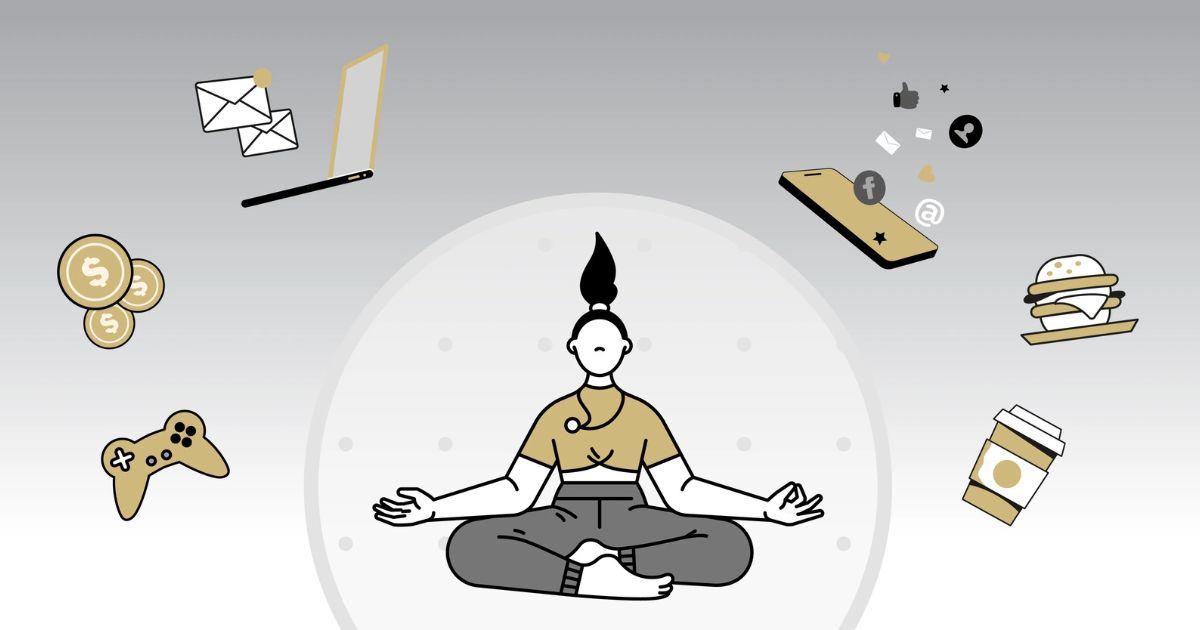
Every ping, buzz, and endless scroll is carefully designed to trigger small bursts of dopamine—the brain’s natural “feel-good” chemical. Normally, dopamine rewards us for things like eating, connecting with others, or accomplishing goals. But in today’s digital world, we’re flooded with those same dopamine spikes instantly, without putting in any real effort.
Here’s what that looks like:
Social media: Likes, comments, and endless feeds keep you chasing the next hit.
Fast food: Quick satisfaction, zero nutrition.
Video games & streaming: Instant reward loops.
Online shopping: The thrill of the “Buy Now” button.
Short-form content: Constant stimulation, no room to think deeply.
The result?
We become mentally exhausted but emotionally unsatisfied. Our brains lose touch with slower, more meaningful sources of joy—like reading a book, going for a walk, or simply sitting in silence.
This constant overstimulation isn’t just tiring—it’s rewiring us. And that’s exactly why a dopamine detox can feel like a life raft in a sea of distractions.
2. What Is a Dopamine Detox, Really?
Let’s get one thing straight: you can’t—and shouldn’t—try to eliminate dopamine. It’s a vital brain chemical that fuels your motivation, sharpens focus, and creates a sense of reward. So when people talk about a “dopamine detox,” what does that really mean?
At its core, a dopamine detox is about reducing overstimulation from quick-fix pleasures that keep your brain stuck in a reward loop.
It’s not about punishing yourself or living like a monk.
It’s about giving your mind a break from the endless craving for instant gratification.
Here’s what it really means:
Cutting down high-dopamine triggers – like mindless scrolling, junk food, or binge-watching
Reconnecting with slower activities – such as journaling, walking, or even just being bored
Resetting your brain’s reward system – so simple things feel meaningful again
Think of it like rebooting your mental operating system. You’re not deleting your files—you’re just shutting down all the unnecessary apps running in the background.
And no, you don’t have to go live in a cabin in the woods. Even a few intentional hours away from noise can create noticeable clarity.
3. Signs You Might Need a Dopamine Detox
You don’t need to hit rock bottom to realize your brain’s been running on overdrive. But sometimes, the signs are subtle… and easy to brush off as “normal.”
Here are some telltale signs your mind is begging for a reset 👇
✨ You constantly feel bored — even when you’re busy
You bounce from app to app, video to video, yet nothing truly satisfies. The moment you stop, boredom creeps in like a fog.
✨ You reach for your phone without thinking
Ever open your phone for something important, only to end up checking social media or messages you’ve already seen? You’re not alone.
✨ You feel more irritable and anxious
Your fuse is shorter. You’re more reactive. And small things that never used to bother you suddenly feel overwhelming.
✨ You struggle with focus and motivation
Tasks that once felt rewarding now feel like chores. You procrastinate more. Your attention span has quietly shrunk.
✨ You keep craving “just one more hit”
One more episode. One more reel. One more snack. You chase the next dopamine hit, but it never feels like enough.
If you nodded along to more than a couple of these, your brain is probably stuck in a dopamine loop—constantly seeking stimulation, never finding peace.
Here’s the bright side: a dopamine detox can break that cycle and guide you back to feeling more present, balanced, and connected with your true self.
Up next: How to actually do a dopamine detox, step-by-step.
4. How to Do a Dopamine Detox: Step-by-Step
So you’re ready to hit the reset button — but not sure where to start? Don’t worry, this isn’t about going cold turkey or giving up joy. It’s about getting back in control of what stimulates your brain and when.
Here’s a simple, human-friendly way to start your dopamine detox 👇
Step 1: Define Your Detox Goals
What are you trying to escape from or reset?
• Is it social media overload?
• Constant distractions?
• Too much screen time?
Get specific. This helps you stay focused when temptations creep in.
Step 2: Identify Your Top Dopamine Triggers
List the things that give you instant gratification but leave you feeling empty afterward:
📱 Scrolling
🍟 Junk food
🎮 Gaming
🛒 Impulse shopping
📺 Binge-watching
These are your detox targets.
Step 3: Clean Up Your Environment
• Turn off non-essential notifications
• Log out of apps or delete them temporarily
• Hide tempting snacks or distractions
Make your space less reactive, more peaceful.
Step 4: Choose a Detox Timeframe
Start small if needed:
⏱️ 2–4 hours of no-stim time
📆 1 full day for a soft reset
📅 3 or 7 days for a deeper cleanse
Pick what fits your lifestyle. You’re not proving anything—you’re healing.
Step 5: Replace, Don’t Just Remove
You can’t just sit and stare at a wall (unless that calms you). Try replacing triggers with nourishing activities:
🧘 Meditation or breathwork
📓 Journaling your thoughts
🚶 A walk without your phone
📖 Reading fiction or personal growth books
🎨 Drawing, sketching, or crafts
Step 6: Reflect at the End
Ask yourself:
✨ What felt uncomfortable?
✨ What felt surprisingly good?
✨ What will I keep doing after this?
This isn’t just a break—it’s a chance to rewire your habits with intention.
Coming up next: How long should your detox really be? Let’s explore the best timeframe for you. 👇
5. Which Detox Duration Is Right for You?
You don’t need to disappear for an entire week to experience the benefits of a dopamine detox. The secret is picking a timeframe that works with your lifestyle, mindset, and personal goals.
Let’s break down the most common options 👇
Mini Detox (2–4 Hours)
Perfect for: Beginners, busy schedules, or daily resets
✅ Helps interrupt autopilot habits
✅ Great way to dip your toes in
🧘 Example: No phone after 7 PM. Read, journal, or stretch instead.
Try this when: You’re feeling mentally cluttered and need a short pause.
1-Day Detox
Perfect for: Weekend reset or when you’re starting to feel burned out
✅ Allows deeper mental clarity
✅ More time to reconnect with low-stim activities
🏞️ Example: Spend a full Sunday offline. Go for a hike, cook slowly, be still.
Try this when: You’re overstimulated but don’t want to overcommit.
3-Day Detox
Perfect for: Breaking addictive loops
✅ Disrupts strong habits like binge-watching or doomscrolling
✅ Gives your brain time to recalibrate
📓 Example: Replace social media with journaling, art, or mindful walks.
Try this when: You’re craving a mental reset that actually sticks.
7-Day Detox
Perfect for: Deep rewiring of habits
✅ Powerful mental transformation
✅ Time to reintroduce intentional stimulation afterward
🌿 Example: Disconnect from all digital dopamine triggers and rebuild slowly.
Try this when: You want to reprogram your routines and create lasting change.
Remember: It’s not about how long you detox. It’s about being intentional, honest, and consistent. Start small if needed — there’s no shame in that. You’re not running a race. You’re reclaiming your peace.
Up next: What should you actually do during your detox? Let’s explore meaningful activities to replace those old habits 👇
6. What to Do During the Detox
So you’ve put the phone away, logged off your apps, and hidden the snacks. Now what?
The goal isn’t to sit there bored out of your mind. It’s to reconnect with activities that bring real peace, joy, and depth—without constant stimulation.
Here’s a list of soul-nourishing, dopamine-safe ideas to try during your detox 👇
✨ Meditate or Practice Breathwork
Even 5 minutes of stillness can quiet the noise in your head.
✨ Try guided meditations or just sit with your breath.
✨ Journal Your Thoughts
Let your thoughts spill onto paper. No filters, no pressure.
💭 Write about how you feel, what you notice, or simply reflect.
✨ Read a Book
Fiction, personal growth, spirituality—anything that feeds your mind gently.
📚 Choose something you’ve been “too distracted” to finish.
✨ Go for a Walk (Without Your Phone!)
Nature has its own calming rhythm.
Listen to the wind, your footsteps, birds—let your senses breathe.
✨ Create Something
Paint. Sketch. Build. Write.
Create without judgment—just for the joy of it.
✨ Connect Face-to-Face
Spend quality time with loved ones.
Talk, cook together, laugh—real connection beats screen time every time.
✨ Rest and Do Nothing
That’s right—absolutely nothing! Boredom might feel uncomfortable, but it’s powerful. It creates space for reflection and sparks fresh ideas.
Don’t rush to fill every moment.
✨ Practice Mindful Rituals
Make tea slowly. Cook intentionally. Clean with music playing softly.
Let simple tasks become meditative experiences.
Your detox isn’t about doing more—it’s about doing less, more mindfully. Let your nervous system exhale.
Up next: How to reflect and reintegrate once the detox is done (without falling back into old traps). 👇
7. How to Reflect After the Detox
You did it. Whether it was 3 hours or 3 days, you hit pause on the noise — and that’s a big deal.
But now comes the most important part: reflection. This is where the real transformation happens.
Here’s how to check in with yourself after your detox 👇
✨ Ask Yourself Honest Questions
Sit with a journal or just reflect quietly:
• What felt difficult?
• What did I miss the most — and why?
• What felt surprisingly good?
• What emotions came up when I removed stimulation?
These answers are gold. They reveal what you really need more or less of in your life.
✨ Write a Simple Detox Recap
Even a short paragraph will help.
Example:
“I noticed how often I reach for my phone when I’m anxious. Walking in silence felt uncomfortable at first, but by Day 2, it felt peaceful. I want to keep that feeling alive.”
Writing it down turns a fleeting experience into wisdom you can revisit.
✨ Identify New Habits You Want to Keep
Maybe you want to:
• Start every morning without screens
• Replace endless scrolling with reading
• Keep one no-tech walk per day
• Silence notifications permanently
You don’t have to go back to the way things were. Keep what nourishes you.
✨ Prepare for the Reentry
Let’s be real—dopamine triggers will come back. But you get to choose how and when.
✅ Set app timers
✅ Keep your detox-friendly activities close
✅ Remember: awareness is your power
Think of your detox as a reset, not a punishment. You’ve quieted the noise… now protect that peace.
Up next: let’s dive into the results. What changes can you expect after a dopamine detox? (Spoiler: the benefits don’t always show up right away.) 👇
8. Benefits You Might Notice After a Dopamine Detox
Mini Case Study: How a 7-Day Dopamine Detox Changed Riya’s Routine
Riya, a 28-year-old graphic designer, noticed she was constantly tired and distracted. She’d open her phone “for just a minute,” then lose an hour scrolling reels. Work felt harder, sleep got worse, and even weekends didn’t feel restful anymore. So she tried a simple 7-day dopamine detox — no social media, no binge-watching, and no late-night snacking. Instead, she replaced those habits with evening walks, journaling, and reading before bed.
The first two days felt uncomfortable — she kept reaching for her phone out of habit. But by Day 4, something shifted. Her mind felt quieter. She finished projects faster. She slept deeper and woke up calmer. At the end of the week, she didn’t quit technology — she simply kept boundaries. Now, she checks social apps only during scheduled times and enjoys more meaningful breaks. Her biggest lesson: peace doesn’t come from more stimulation — it comes from choosing less, intentionally.
Let’s be honest: you won’t suddenly float into enlightenment after a day offline. But if you stick with it, the shifts — though quiet — can be profound.
Here are some of the most common (and powerful) benefits people experience after a dopamine detox 👇
✨ Mental Clarity
No more feeling foggy or constantly scattered.
You’ll be able to think more clearly, make decisions faster, and actually focus again.
✨ Time Feels Slower (In a Good Way)
When you’re not chasing quick hits of dopamine, time opens up.
Days feel longer, calmer… even peaceful.
✨ More Energy & Motivation
Constant stimulation drains your brain. Without it?
You’ll feel more driven to do meaningful tasks — not just scroll or snack.
✨ Less Anxiety
All that buzzing, clicking, refreshing — it keeps your nervous system on edge.
A detox helps you slow down, breathe deeper, and feel safer in your body.
✨ Better Focus & Productivity
Without 100 open tabs in your brain, you can finally:
✅ Read that book
✅ Work deeply
✅ Finish things that matter
To build stronger daily mental habits alongside your detox, also check out Daily Habits for Better Mental Health — simple routines that support focus and calm every day.
✨ Deeper Enjoyment of Simple Things
A cup of tea. A walk in nature. A conversation.
These feel richer when your brain isn’t numb from overload.
✨ Improved Sleep
Less screen time = better melatonin production.
Your sleep gets deeper and more restorative.
✨ Reconnection With Yourself
Without distractions, you may remember things you’ve ignored:
• Feelings
• Dreams
• Desires
• Boundaries
💡 You get back in touch with the real you.
These benefits might not all show up at once — but give it time. Your brain is healing. Your peace is coming back.
Up next: Let’s make sure your detox results actually last. 👇
9. How to Maintain the Benefits Long-Term
You felt the peace. You loved the clarity. But… life’s fast. Screens are everywhere. So, how do you keep the detox magic alive?
Here’s how to maintain your dopamine balance without going full monk mode 👇
✨ Schedule Regular “Mini Detoxes”
Make small breaks a habit, not a crisis response.
🧘♀️ Try:
• 1 screen-free evening per week
• 10 minutes of quiet every morning
• A walk without your phone every day
✨ Set Clear Boundaries With Tech
You can be in control — not the algorithm.
📵 Try:
• App limits
• No-phone zones (like your bed or dinner table)
• “Digital sunset” an hour before sleep
✨ Be Intentional With Pleasure
Not all dopamine is bad — the key is balance.
💡 Ask: “Is this truly rewarding or just numbing?”
Swap:
• Doomscrolling → meaningful reading
• Auto-play → deep focus
• Junk food → nourishing snacks
✨ Keep Doing Low-Dopamine Activities
Don’t stop the good stuff.
Journal. Walk. Create. Meditate. These activities gently stimulate you without frying your brain.
✨ Revisit Your “Why” Often
When temptation creeps in, remember what clarity felt like.
Write it down. Keep a note in your phone. Remind yourself:
“I feel better when I’m not constantly chasing hits.”
✨ Talk About It With Others
Accountability helps.
Share your detox story. Invite a friend to try it. It makes the habit stronger and more joyful.
Lasting change isn’t about being perfect—it’s about staying aware, making intentional choices, and giving yourself small resets along the way. Keep choosing your peace.
Now, let’s wrap it all up and remind you why this journey is so worth it.
10. Final Thoughts: It’s Not About Perfection, It’s About Power
Let’s get one thing straight:
A dopamine detox isn’t about becoming a productivity machine. It’s not about “quitting fun” or hating your phone.
It’s about remembering your power in a world built to distract you.
You took time to pause.
To notice how often you reach for noise.
To choose stillness when stimulation was an option.
That alone makes you powerful.
Perfection? Not required.
You’ll slip up. You’ll scroll. You’ll binge. That’s okay.
What matters is the awareness you’ve gained.
So when you feel overwhelmed again (and you will):
📵 Take a step back.
🌿 Breathe.
💭 Come home to yourself.
You now have the tools.
You’ve seen what’s possible when the noise fades and the real you speaks up.
You don’t need to detox forever.
But you do deserve to feel present, peaceful, and in control.
And the best part?
You can start again — any time.
Thanks for reading. Now go protect your peace like it’s your most valuable currency — because honestly… it is.
Disclaimer: This article is educational and not a medical treatment. If you struggle with addiction or mental health issues, consult a professional.
Common Questions About Dopamine Detox (FAQ)
1️⃣ Is a dopamine detox scientifically proven?
A dopamine detox doesn’t remove dopamine — it simply reduces overstimulation. While the term is trendy, the idea is grounded in behavioral psychology: limiting constant stimulation helps your brain reset habits and rebuild focus.
2️⃣ How often should I do a dopamine detox?
Most people benefit from mini detoxes weekly and longer detoxes once a month — but consistency matters more than intensity.
3️⃣ Will I feel withdrawal or discomfort?
Yes — boredom, restlessness, or irritability can happen. These are signs your brain is adjusting, not that something is wrong.
4️⃣ Can I still use my phone for work during a detox?
Yes — the goal isn’t zero technology. Keep essential tasks and remove mindless habits like scrolling, binge-watching, and constant notifications.
5️⃣ Is caffeine or sugar allowed during a dopamine detox?
Preferably minimize them. They can trigger the same instant-reward cycle you’re trying to reset — but moderation is better than strict restriction.
6️⃣ Is this the same as a “digital detox”?
Not exactly. A digital detox focuses only on screens. A dopamine detox also looks at food, shopping, gaming, and other instant-pleasure behaviors.
7️⃣ How long do results usually last?
Clarity comes quickly, but lasting change happens when you maintain healthier habits. A dopamine detox resets your brain — what you do afterward determines how long the benefits stay.
8️⃣ Can kids or teenagers try dopamine detox?
Yes — but gently. Focus on reducing screen time and building healthier routines, not strict rules or punishments.
9️⃣ What if my job requires social media?
Create boundaries: schedule usage, avoid endless scrolling, and separate work time from personal dopamine hits.
🔟 What if I “fail” and break my detox?
You didn’t fail — you noticed. Awareness is the real goal. Simply reset and continue.
If this helped, consider trying a small dopamine detox today — even one hour can change how your mind feels.