Dopamine Detox: Reclaim Focus & Inner Peace Naturally
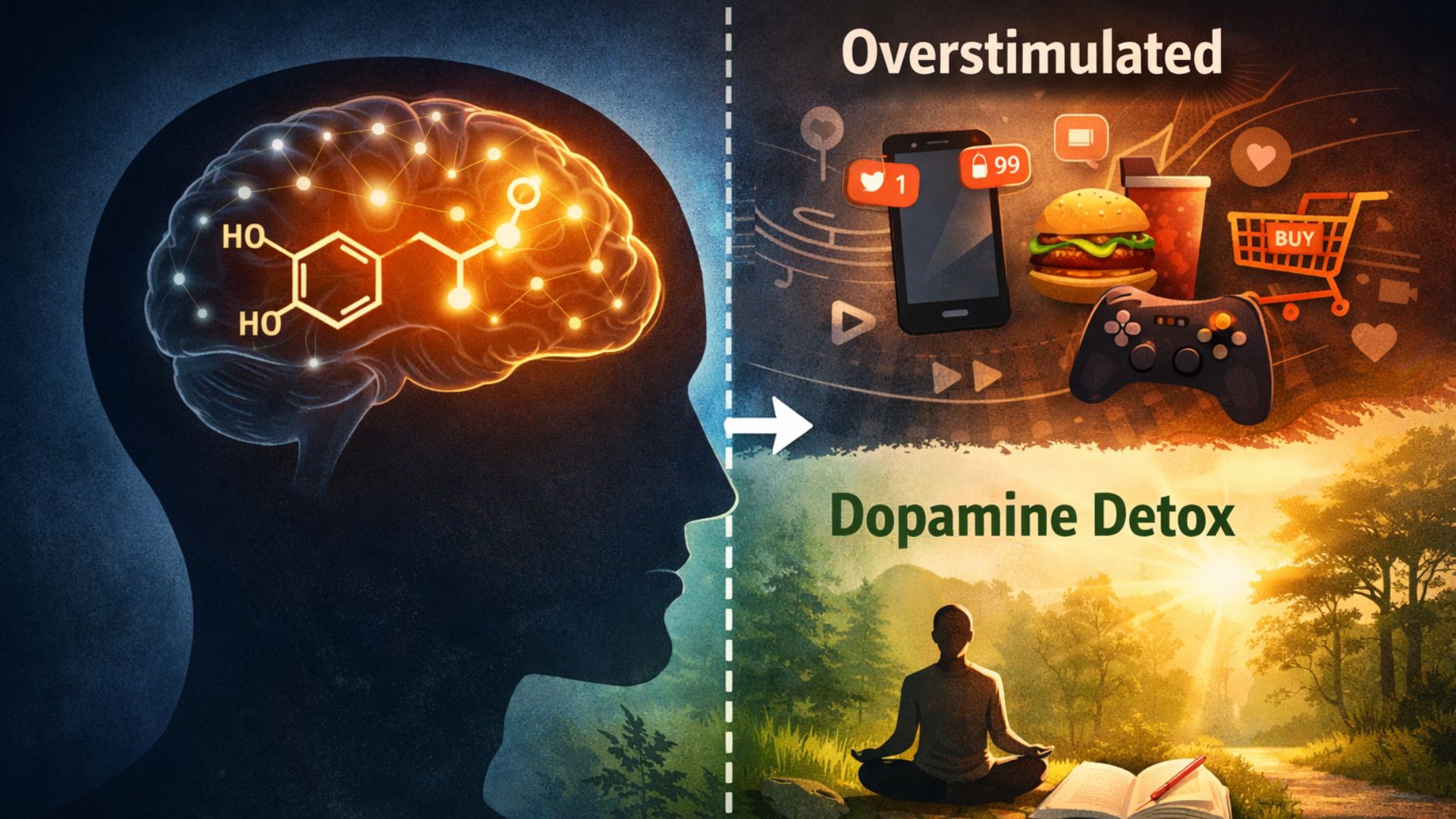
Ever feel mentally exhausted after scrolling, streaming, or multitasking all day — but still not satisfied or productive? That’s a sign your brain may be overstimulated. A dopamine detox helps you step back from constant digital triggers and instant rewards so your mind can slow down, reset, and rediscover focus in a healthier way.
In this article:
- Why Are We So Overstimulated?
- What Is a Dopamine Detox, Really?
- Signs You Might Need a Dopamine Detox
- How to Do a Dopamine Detox: Step-by-Step
- Which Detox Duration Is Right for You?
- What to Do During the Detox
- How to Reflect After the Detox
- Real Benefits You Can Expect
- How to Maintain the Benefits Long-Term
- Final Thoughts & Motivation Boost
- Common Questions About Dopamine Detox (FAQ)
1. Why Are We So Overstimulated?
If you’ve ever checked your phone “for a second” and resurfaced 45 minutes later, you’ve experienced how modern environments compete for your attention.
Overstimulation today isn’t accidental. Digital platforms, ultra-processed foods, short-form videos, online shopping, and gaming are all built around rapid reward cycles. These systems are designed to trigger dopamine release — the neurotransmitter linked to motivation, anticipation, and reward prediction.
Under normal conditions, dopamine reinforces behaviors essential for survival and growth:
- Completing meaningful tasks
- Social bonding
- Physical movement
- Achieving long-term goals
But modern technology compresses those reward cycles into seconds.
Examples of high-frequency stimulation include:
- Social media notifications and infinite scroll
- Algorithm-driven short videos
- Fast food engineered for hyper-palatability
- Gaming reward loops
- One-click purchasing systems
The issue is not dopamine itself. The issue is frequency and intensity.
When stimulation is constant:
- Baseline focus drops
- Delayed gratification feels harder
- Simple activities feel “boring”
- Mental fatigue increases
Over time, your brain adapts to higher stimulation thresholds. That adaptation is why slower, meaningful activities may feel less engaging.
This is the environment that makes the concept of a dopamine detox appealing — not as a cure, but as a reset of stimulation levels.
2. What Is a Dopamine Detox, Really?
First, clarity: you cannot eliminate dopamine — and you shouldn’t. Dopamine is essential for motivation, learning, and goal-directed behavior.
A “dopamine detox” is not a chemical detox. It is a behavioral reset strategy.
In practical terms, it means intentionally reducing exposure to:
- Instant gratification triggers
- High-frequency digital rewards
- Compulsive stimulation habits
The goal is to:
- Lower artificial stimulation
- Rebuild tolerance for delayed reward
- Restore focus capacity
From a behavioral psychology perspective, this approach is closer to:
- Stimulus control
- Habit interruption
- Reward system recalibration
It does not require extreme isolation or abandoning technology. Even structured reduction — such as scheduled phone use or screen-free evenings — can help reduce reward-seeking autopilot behavior.
Think of it less as detoxification, and more as intentional stimulus management.
3. Signs You Might Need a Dopamine Detox
Not everyone needs a full reset. But certain patterns suggest overstimulation may be affecting your focus or mood.
Common signs include:
• Reduced attention span
You struggle to stay engaged with reading, deep work, or long conversations.
• Compulsive checking behavior
You open apps reflexively, even without a clear purpose.
• Increased irritability
Minor delays or boredom feel unusually frustrating.
• Decreased motivation for meaningful tasks
Important work feels harder to start than quick entertainment.
• Persistent mental fatigue
You feel tired despite not doing physically demanding work.
These signs do not mean something is “wrong” with you. They often reflect environmental conditioning.
If multiple patterns feel familiar, structured reduction of stimulation may help you regain cognitive control.
4. How to Do a Dopamine Detox: Step-by-Step
The most effective dopamine detox plans are practical and sustainable.
Step 1: Define the Target Behavior
Be specific. Instead of “use phone less,” identify:
- Social media scrolling after 10 PM
- Gaming before work
- Snacking during stress
Specific targets improve compliance.
Step 2: Identify High-Reward Triggers
List behaviors that provide fast stimulation but low long-term value:
- Endless scrolling
- Binge-watching
- Impulse purchases
- Ultra-processed snacks
Awareness reduces automatic repetition.
Step 3: Modify Your Environment
Reduce friction for good habits and increase friction for impulsive ones:
- Turn off non-essential notifications
- Log out of distracting apps
- Remove apps from home screen
- Keep phone outside bedroom
Environment design is often more powerful than willpower.
Step 4: Choose a Clear Timeframe
Start realistically:
- 2–4 hours of intentional low stimulation
- 1 full day reset
- 3–7 day structured break
Short consistency is better than extreme inconsistency.
Step 5: Replace, Don’t Eliminate
The brain resists empty space. Replace stimulation with:
- Reading
- Walking
- Skill learning
- Writing
- Deep work blocks
Replacement behaviors stabilize the reset process.
Step 6: Reflect and Adjust
At the end of the detox window, evaluate:
- Was focus improved?
- Did anxiety decrease?
- Which triggers were hardest to avoid?
Adjustment makes the next cycle more effective.
5. Which Detox Duration Is Right for You?
Duration depends on your goal.
Mini Reset (2–4 Hours)
Best for daily interruption of autopilot scrolling.
One-Day Reset
Helpful for mental clarity and nervous system recovery.
Three-Day Reset
More effective for breaking habitual digital loops.
Seven-Day Reset
Useful for identifying deeper behavioral dependencies and restructuring routines.
Research on habit change suggests that interruption periods help weaken cue-response patterns — but long-term results depend on what you do after reintroduction.
Consistency matters more than intensity.
6. What to Do During the Detox
Low-stimulation does not mean inactivity. It means intentional activity.
Effective alternatives include:
- Walking without headphones
- Reading long-form content
- Practicing focused breathing
- Journaling cognitive patterns
- Learning a complex skill
- Face-to-face conversations
The aim is to:
- Rebuild sustained attention
- Increase discomfort tolerance
- Strengthen intrinsic motivation
Mild boredom is expected. It is part of recalibrating reward sensitivity.
7. How to Reflect After the Detox
Reflection transforms a short break into behavioral change.
Consider documenting:
- What behaviors felt automatic?
- What emotional states triggered urges?
- Did sleep quality improve?
- Did work output change?
Many people notice that stress — not entertainment — drives compulsive stimulation.
Use insights to create boundaries, such as:
- No-phone mornings
- Social media only after work
- Device-free meals
Reintroduction should be structured, not impulsive.
8. Benefits You Might Notice After a Dopamine Detox
Results vary, but common reports include:
Improved focus stability
Longer periods of deep concentration.
Reduced anxiety spikes
Fewer micro-stress triggers from constant notifications.
Better sleep onset
Lower evening stimulation supports melatonin production.
Increased task completion
Less task-switching improves productivity.
Stronger intrinsic enjoyment
Simple activities feel more engaging.
Benefits are usually subtle at first. They accumulate with repetition.
9. How to Maintain the Benefits Long-Term
Long-term success depends on structure.
Practical maintenance strategies:
- Weekly screen-light evenings
- App usage limits
- Removing non-essential notifications permanently
- Scheduled social media windows
- Keeping devices out of the bedroom
Rather than avoiding dopamine, aim to:
- Prioritize effort-based rewards
- Limit passive consumption
- Build delayed gratification tolerance
Sustainable systems outperform temporary detoxes.
10. Final Thoughts: It’s Not About Perfection, It’s About Power
A dopamine detox is not about rejecting technology or eliminating pleasure.
It is about regaining intentional control over stimulation.
Modern systems compete for your attention. Awareness allows you to decide:
- What deserves your focus
- When you engage
- How long you stay
You don’t need extreme discipline. You need structure.
Small, repeated resets can strengthen attention, reduce compulsive habits, and restore cognitive clarity over time.
Disclaimer: This article is educational and not a medical treatment. If you struggle with addiction or mental health issues, consult a professional.
Common Questions About Dopamine Detox (FAQ)
1️⃣ Is a dopamine detox scientifically proven?
A dopamine detox doesn’t remove dopamine — it simply reduces overstimulation. While the term is trendy, the idea is grounded in behavioral psychology: limiting constant stimulation helps your brain reset habits and rebuild focus.
2️⃣ How often should I do a dopamine detox?
Most people benefit from mini detoxes weekly and longer detoxes once a month — but consistency matters more than intensity.
3️⃣ Will I feel withdrawal or discomfort?
Yes — boredom, restlessness, or irritability can happen. These are signs your brain is adjusting, not that something is wrong.
4️⃣ Can I still use my phone for work during a detox?
Yes — the goal isn’t zero technology. Keep essential tasks and remove mindless habits like scrolling, binge-watching, and constant notifications.
5️⃣ Is caffeine or sugar allowed during a dopamine detox?
Preferably minimize them. They can trigger the same instant-reward cycle you’re trying to reset — but moderation is better than strict restriction.
6️⃣ Is this the same as a “digital detox”?
Not exactly. A digital detox focuses only on screens. A dopamine detox also looks at food, shopping, gaming, and other instant-pleasure behaviors.
7️⃣ How long do results usually last?
Clarity comes quickly, but lasting change happens when you maintain healthier habits. A dopamine detox resets your brain — what you do afterward determines how long the benefits stay.
8️⃣ Can kids or teenagers try dopamine detox?
Yes — but gently. Focus on reducing screen time and building healthier routines, not strict rules or punishments.
9️⃣ What if my job requires social media?
Create boundaries: schedule usage, avoid endless scrolling, and separate work time from personal dopamine hits.
🔟 What if I “fail” and break my detox?
You didn’t fail — you noticed. Awareness is the real goal. Simply reset and continue.
If this helped, consider trying a small dopamine detox today — even one hour can change how your mind feels.