How to Start Forex with ₹1000 (Beginner-Friendly Guide)
How to Start Forex with ₹1000 might sound challenging, but the truth is that anyone can begin trading safely even with a small amount — as long as you follow the right steps. With micro-lot trading, proper risk management, and a reliable low-spread broker, ₹1000 is enough to learn, practice, and slowly grow your skills. This beginner-friendly guide will show you exactly how to use your ₹1000 wisely, avoid common mistakes, and build a strong foundation for long-term Forex success.
In This Beginner-Friendly Guide, You’ll Learn:
- Can You Really Start Forex with ₹1000?
- The Smartest Way to Use a Small Trading Account
- Choosing the Right Broker (Most Important Step)
- Simple Strategies That Work for ₹1000 Accounts
- Risk Management Rules You Must Follow
- Common Mistakes Beginners Make — And How to Avoid Them
- How to Grow Your ₹1000 Account Safely
- Conclusion
1. Can You Really Start Forex with ₹1000? 💡
Yes — you absolutely can start Forex with ₹1000, and thousands of beginners in India already do it successfully. The key is understanding what a small account can realistically achieve and how to protect your capital while building skills.
Many new traders assume they need ₹10,000–₹50,000 to begin trading. But thanks to micro-lot trading, low spreads, and leveraged accounts, even ₹1000 is enough to start your Forex journey. What matters is not the size of your capital but the clarity of your plan, the broker you choose, and how carefully you manage each trade.
With ₹1000, your primary goals should be:
- Learning the basics without blowing your account
- Practicing consistently using micro-lot sizes
- Building a routine for entries, stop-losses, and risk control
- Avoiding emotional decisions that cause over-trading
👉 If you stick to small positions and follow a clear strategy, ₹1000 becomes a powerful training account that prepares you for larger capital later.
What you should not expect with ₹1000
A small account is perfect for learning — but not for becoming rich quickly. Avoid any video or Telegram group claiming you can turn ₹1000 into ₹1 lakh in a week. Those are traps that push beginners into using huge lot sizes.
Instead, think of your ₹1000 as:
- Your practice capital
- Your skill-building foundation
- Your safe entry point into real-market experience
If you focus on steady learning and proper risk management, your ₹1000 account becomes a stepping stone toward consistent profitability.
2. The Smartest Way to Use a Small Trading Account 🚀
Trading with ₹1000 requires a different approach compared to larger accounts. The goal is simple: protect your capital first, grow slowly second. Many beginners fail because they treat a small account like a lottery ticket — but smart traders treat it like a long-term training tool.
Here’s the smartest way to use your ₹1000 account effectively:
✅ Start with Micro-Lot Trading
Always trade 0.01 lots in the beginning.
This keeps your losses extremely small and gives you the freedom to practice without fear.
✅ Stick to Major Currency Pairs
Majors like EUR/USD, GBP/USD, and USD/JPY have:
- Low spreads
- Smooth movements
- Less volatility
This is ideal for beginners and small accounts.
✅ Use a Low-Spread ECN Broker
A good broker makes a huge difference with small capital. High spreads eat into tiny profits, so you need a platform that gives you the lowest trading costs.
A popular choice among beginners and professionals is IC Markets, known for:
- Ultra-low spreads
- Fast execution
- Perfect for micro-lot trading
- Ideal for small accounts
👉 You can start safely and practice with micro-lots here
✅ Keep Your Risk Extremely Low
With ₹1000, protect your account by risking:
- 0.5%–1% per trade only
- Use stop-loss in every trade
- Avoid trading during major news events
✅ Focus on 1–2 Setups Only
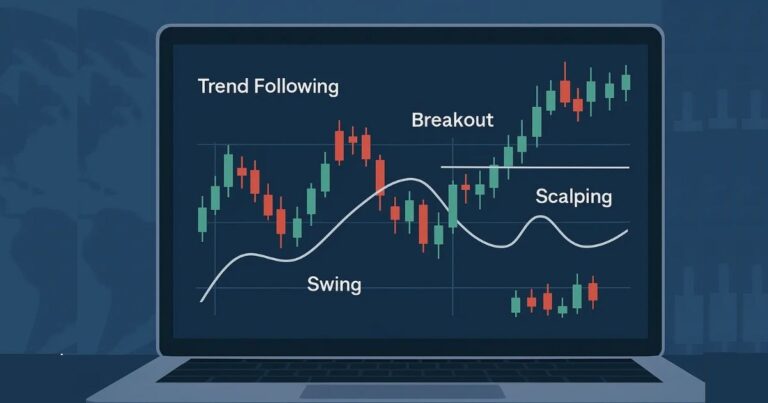
Don’t rush into every chart. Pick one simple setup (trend-following or breakout) and master it. Small accounts grow best through consistency, not random trades.
3. Choosing the Right Broker (Most Important Step) 🏦
When you are starting Forex with just ₹1000, choosing the right broker is the single most important decision you will make. A good broker protects your money. A bad one destroys your account before you even learn the basics.
Small accounts need three things from a broker:
1️⃣ Low spreads (so your profits aren’t eaten by fees)
2️⃣ Fast execution (so your trades enter at the right price)
3️⃣ Micro-lot availability (so you can trade safely)
If a broker has high spreads, delayed execution, or forces you to trade big lot sizes, your ₹1000 account won’t survive long. That’s why most new traders struggle — not because of their skills, but because they signed up with the wrong platform.
What to look for in the right broker
To protect your account and trade smoothly, make sure your broker offers:
- ECN or Raw spread accounts
- Tight spreads below 1 pip on major pairs
- High regulation and transparency
- Supports MT4, MT5, or TradingView
- Easy deposits and withdrawals
- Stable mobile app + desktop platform
Beginners especially benefit from brokers with clear dashboards, simple order placement, and fast customer support.
A good broker becomes your trading foundation. With the right platform, even a ₹1000 account can last long enough for you to build skills, confidence, and discipline. With the wrong broker, even ₹1,00,000 will disappear quickly.
Think of your broker as your trading partner — choose wisely, and your journey becomes much smoother.
4. Simple Strategies That Work for ₹1000 Accounts 📉📈
With a small account, you don’t need complex systems or 20 indicators. What you need is simplicity, consistency, and risk control. The best strategies for ₹1000 accounts are the ones that use clear rules, small stop-losses, and easy-to-spot entry signals.
Here are beginner-friendly strategies that work extremely well:
✅ 1. Trend-Following Strategy (Most Reliable)
Trading with the overall trend gives small accounts a higher probability of success.
Look for:
- Higher highs & higher lows → Buy
- Lower highs & lower lows → Sell
Use a simple 50-period moving average to confirm direction.
✅ 2. Breakout Strategy (Clear & Powerful)
Small accounts love breakouts because:
- The moves are strong
- Stop-losses are small
- Targets are easy to reach
Look for price breaking out of a tight range or consolidation zone.
✅ 3. Support & Resistance Bounces
Mark major zones and wait for price to react.
This gives:
- Clean entries
- Low-risk trades
- High reward-to-risk setups
Perfect for small accounts that can’t afford wide stop-losses.
Why these strategies work for ₹1000
These approaches are ideal because they don’t require large lot sizes, huge stop-losses, or volatile pairs. They are stable, predictable, and easy to learn — exactly what beginners need.
What to avoid
- Scalping gold (XAU/USD)
- Over-trading on M1 charts
- Using too many indicators
- Trading during big news events
Your goal with a ₹1000 account is not to win every trade — it’s to learn a clean, repeatable strategy that builds consistency over time.
👉 Want more beginner-friendly setups? Explore my complete guide on Forex Trading Strategies for 2025 to learn additional simple and proven methods for small accounts.
5. Risk Management Rules You Must Follow ⚠️
Risk management is the true backbone of long-term Forex success — especially when you’re starting with just ₹1000. Even if your strategy is perfect, poor risk control can destroy your account in a few trades. Smart traders protect their capital first and focus on growth later.
The goal for a ₹1000 account is simple:
Stay in the game long enough to learn.
To do that, follow these essential rules:
✅ Risk Only 0.5%–1% Per Trade
With ₹1000, this means:
- ₹5 to ₹10 per trade
This small risk protects your account and keeps emotions under control.
✅ Always Use a Stop-Loss
Never enter a trade without a pre-decided stop-loss.
This prevents panic exits, revenge trading, and heavy losses.
✅ Choose Pairs with Tight Spreads
Majors like EUR/USD and USD/JPY reduce your trading costs, especially for small accounts.
✅ Avoid Over-Leveraging
Use leverage wisely — it should support your strategy, not explode your account.
Avoid opening big trades that put your entire margin at risk.
✅ Limit Your Trades Per Day
2–3 high-quality setups are more than enough.
More trades → more chances to make emotional mistakes.
⭐ Why Risk Management Matters Most
Many beginners lose money not because they are “bad traders,” but because they risk too much, too soon.
Good risk management protects your ₹1000 from big losses, giving you the confidence to trade with a stable mindset.
6. Common Mistakes Beginners Make — And How to Avoid Them ❌
New traders often repeat the same mistakes — and these errors hurt small accounts the most. Understanding them early will save you money, stress, and months of frustration.
Here are the biggest mistakes beginners make and how you can avoid them:
🚫 Mistake 1: Using Big Lot Sizes
Beginners use large positions hoping for quick profits, but this usually leads to account blowouts.
Solution: Stick to 0.01 lots until you build consistency.
🚫 Mistake 2: Trading Without a Plan
Entering trades randomly because a candle “looks good” is a guaranteed way to lose money.
Solution: Follow one simple strategy and learn it deeply.
🚫 Mistake 3: Over-Trading
Beginners try to catch every move in every pair, resulting in high losses.
Solution: Trade only 1–2 currency pairs. Quality over quantity.
🚫 Mistake 4: Trading During High-Impact News
News can cause sudden spikes that wipe out small accounts instantly.
Solution: Avoid trading 30 minutes before and after major news events.
🚫 Mistake 5: Chasing Losses (Revenge Trading)
Trying to “win back” losses always leads to bigger losses.
Solution: Accept losses calmly — they are part of trading.
⭐ The key to avoiding these mistakes
Stay patient, follow your rules, and treat your ₹1000 account as a learning engine.
Small accounts succeed when traders remain disciplined, not emotional.
7. How to Grow Your ₹1000 Account Safely 🌱
Growing a small account takes patience, discipline, and the right mindset. It’s not about “doubling money fast.”
It’s about building a consistent and scalable approach.
Here’s how to grow your account safely:
📌 1. Focus on Percentage Growth, Not Rupees
If you grow your account by just 3–5% a week, that’s excellent.
With compounding, even small gains add up.
For example:
- Week 1: ₹1000 → ₹1030
- Week 4: ₹1000 → ₹1125
- Week 12: ₹1000 → ₹1450+
Slow but steady wins.
📌 2. Increase Lot Size Only After Consistency
Do not increase your lot size after one lucky winning week.
Increase only when:
- You followed all rules
- You have a positive record for 4+ weeks
- Your account has grown at least 20–30%
📌 3. Withdraw a Small Profit Monthly
Withdrawing a small portion (10–20%) helps you:
- Lock in profits
- Avoid the “gambling mindset”
- Build confidence
📌 4. Keep Learning & Updating Your Knowledge
Forex changes. Market conditions shift.
Keep yourself updated by learning about:
- Economic news
- Chart patterns
- Global events affecting currency movements
This long-term learning habit is what separates successful traders from quitters.
📌 5. Explore Reliable Forex Resources
As you level up, explore more advanced strategies and broker insights.
For example, my in-depth guide on choosing the right Forex broker explains how spreads, leverage, and regulations affect small accounts. It’s a helpful next step once you start trading confidently.
📌 6. Be Patient — Compounding Takes Time
A ₹1000 account won’t turn into ₹1 lakh in a month.
But with discipline and consistency, it can grow gradually without unnecessary risk.
Think long term. Trade smart. Stay consistent.
That’s how real traders grow.
Conclusion
Starting Forex trading with just ₹1000 is absolutely possible — as long as you approach it with patience, discipline, and the right expectations. Small accounts don’t grow through luck; they grow through smart risk management, consistent strategies, and choosing a reliable broker.
If you avoid common beginner mistakes, focus on percentage growth, and improve step by step, your ₹1000 account can become a strong foundation for long-term trading success. And once you’re ready to go deeper, you can explore more advanced guidance, like this detailed breakdown on how to choose the right Forex broker on my website — it’s a helpful next step for leveling up your trading knowledge.
Stay consistent, stay calm, and trade smart. Your journey to becoming a confident Forex trader starts with one small, disciplined step.
Quick Answers for New Traders 📝
Q1. Can I really start Forex with ₹1000?
Yes! You can start Forex with ₹1000 using micro-lots, proper risk management, and a reliable broker. This beginner-friendly guide shows you how to trade safely without risking your entire account.
Q2. Which broker is best for a ₹1000 Forex account?
For small accounts, choose a broker with low spreads, fast execution, and micro-lot trading. Platforms like IC Markets are beginner-friendly and ideal for ₹1000 accounts. Start here.
Q3. How much should I risk per trade with ₹1000?
With a small account, risk only 0.5%–1% per trade. That means ₹5–₹10 per trade. This helps protect your account while you learn.
Q4. What Forex strategies work best for ₹1000 accounts?
Simple strategies work best. Focus on:
– Trend-following trades
– Breakout setups
– Support & resistance bounces
Avoid complex multi-indicator systems; consistency matters more than complexity.
Q5. Can I grow ₹1000 into a large account quickly?
No, small accounts grow gradually. Focus on percentage growth, risk management, and compounding. Slow and steady is the key to long-term success.
Q6. Should I trade during news events with ₹1000?
No. High-impact news can cause sudden price spikes that wipe out small accounts. Trade only during stable market conditions until you gain experience.
Q7. How can I avoid beginner mistakes with a small account?
Avoid overtrading, revenge trading, excessive leverage, and trading without a plan. Stick to one strategy, use stop-losses, and trade patiently.
Q8. Is ₹1000 enough to learn Forex effectively?
Absolutely! Think of ₹1000 as practice capital. It allows you to learn entries, risk management, and strategy execution without risking too much money.
If you want a clear understanding of money management and financial basics before starting forex, explore our complete finance and investing guide.
Read the full guide here