Kargil War 1999: Causes, Battles, Heroes & Impact Explained
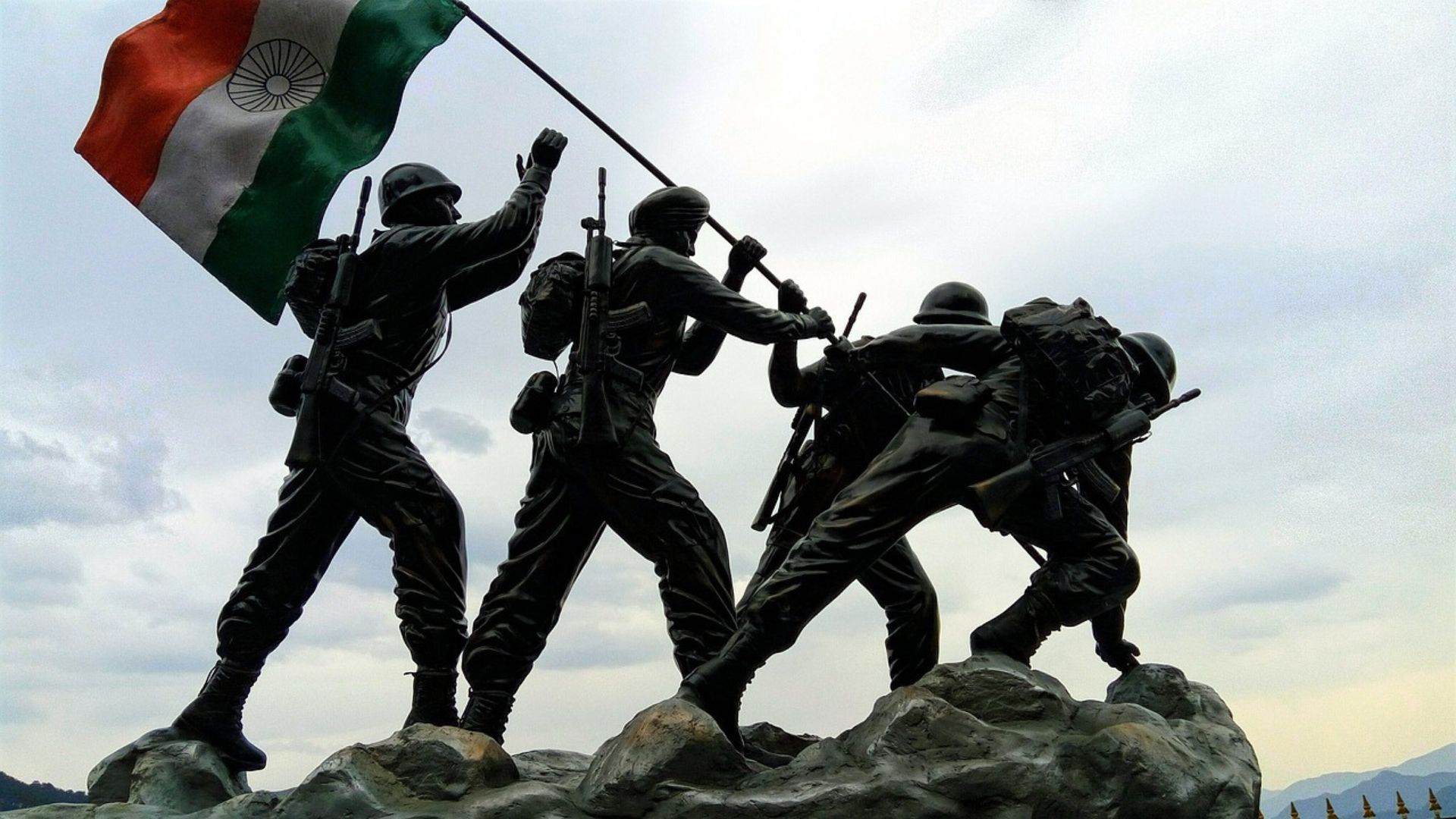
The Kargil War 1999 remains one of the most defining conflicts in modern Indian history. Fought in the high mountains of Ladakh, this war revealed the bravery of Indian soldiers and exposed the real challenges along the India-Pakistan border. Understanding the causes, key events, and long-term impact of the Kargil War 1999 helps us see how this short but intense conflict reshaped regional security and changed India-Pakistan relations for years to come.
Kargil War 1999 — Quick Summary
• Conflict: India vs Pakistan (May–July 1999)
• Location: Kargil, Dras & Batalik (Ladakh)
• Outcome: India recaptured occupied peaks
• Key Operation: Operation Vijay
• Significance: Strengthened India’s defence & diplomacy
Casualties & Key Numbers
| Category | Approx. Number |
|---|---|
| Indian soldiers martyred | ~500 |
| Pakistani losses | Higher, not officially confirmed |
| Peaks recaptured | 130+ |
| Duration of conflict | About 2 months |
In This Article:
- What Triggered the Kargil War 1999
- Major Battles and Key Events
- Role of Indian Soldiers and Heroes in the Kargil War 1999
- International Reaction to the Conflict
- How the War Changed India-Pakistan Relations
- Lasting Impact on India’s Defence Strategy
- Conclusion
1. What Triggered the Kargil War 1999
The Kargil War 1999 didn’t happen overnight—it was the result of long-standing tension, mistrust, and strategic miscalculations between India and Pakistan. After the 1972 Simla Agreement, both countries agreed to respect the Line of Control (LoC). But in the late 1990s, Pakistan’s military leadership secretly planned a high-altitude intrusion into Indian territory. Their aim was simple yet dangerous: capture key mountain peaks in Kargil and cut off India’s access to Ladakh.
What made the situation worse was the element of surprise. Indian patrol teams first noticed unusual activity in early May 1999. When they went to check, they were fired upon—revealing that well-armed Pakistani soldiers and militants had already taken strategic positions on the icy mountain ridges.
Several factors contributed to this escalation:
- Pakistan’s desire to alter the LoC and gain tactical advantage
- Misreading India’s response, assuming India would not retaliate strongly
- Failed peace efforts, including the Lahore Declaration just months earlier
- Militant infiltration efforts, encouraged by Pakistan’s military leadership
🔎 What Went Wrong — Lessons from Kargil
The Kargil War did not happen because of a single mistake. Instead, it was the result of several failures happening at the same time:
- Pakistan miscalculated India’s response, assuming the conflict would remain localized.
- Intelligence warnings were not fully connected, which delayed detection of intrusions.
- Mountain areas were considered “low-risk”, so regular patrols were limited.
- Political signals were misunderstood, especially after the Lahore peace talks.
What made Kargil different is that the conflict unfolded quietly at first, high in the mountains, without the usual signs of war. By the time the intrusion was fully understood, enemy positions were already fortified on the peaks.
🧠 Key takeaway: Kargil proved that even during peace talks, nations must maintain strong surveillance, communication, and preparedness — especially in sensitive border regions.
Once the truth was uncovered, India launched a determined military operation—Operation Vijay—to reclaim the peaks. The intrusion was not just a territorial challenge; it was a direct violation of past agreements and a threat to regional stability.
🗓️ Quick Timeline: Kargil War 1999 (Key Dates)
- Early May 1999: Indian patrol units detect unusual movement in Kargil.
- 26 May 1999: India launches air operations under Operation Safed Sagar.
- 6 June 1999: Indian Army begins full-scale ground assaults in Kargil.
- 4 July 1999: Tiger Hill is successfully recaptured.
- 11–14 July 1999: Pakistan announces withdrawal of remaining forces.
- 26 July 1999: Conflict officially ends — celebrated as Kargil Vijay Diwas.
📊 Key Facts About the Kargil War 1999
- The fighting took place at altitudes between 14,000 and 18,000 feet.
- Nearly 500 Indian soldiers lost their lives defending the nation.
- India recaptured over 130 strategic peaks and ridges.
- Temperatures dropped to –10°C to –20°C at night.
- Many operations were carried out under constant artillery shelling.
- The terrain was so steep that soldiers had to climb with ropes and ice axes.
2. Major Battles and Key Events
The Kargil War 1999 is remembered for some of the most intense mountain warfare ever fought. Soldiers battled at altitudes above 16,000 feet, where oxygen was thin, temperatures were freezing, and every step was a fight for survival.
Here are the major battles that shaped the war:
🔹 Battle of Tololing
This was one of the earliest and toughest battles. The peak offered a clear view of the Srinagar–Leh highway, making it strategically vital. Indian troops fought relentlessly, climbing near-vertical cliffs under enemy fire. Winning Tololing boosted morale and marked the first major victory of the war.
🔹 Tiger Hill Operation
Perhaps the most iconic moment of the war. Tiger Hill stood tall and intimidating, with steep slopes that were almost impossible to climb. Yet, Indian soldiers managed the impossible. Their night assault, using ropes and ice axes, became a symbol of extraordinary courage. The victory on Tiger Hill dramatically shifted the momentum in India’s favour.
🔹 Point 4875 (Batra Top)
Named after Captain Vikram Batra, this point witnessed fierce hand-to-hand combat. Batra’s bravery—summarised in his famous phrase “Yeh Dil Maange More!”—inspired soldiers across the nation. His sacrifice turned this battle into one of the war’s defining moments.
🔹 Dras and Batalik Sectors
These regions saw multiple clashes as Indian forces slowly pushed the intruders back across the LoC. Every captured peak required hours of climbing through snow, carrying weapons, and fighting at close range.
Key events during the conflict included:
- India launching Operation Vijay to drive out the intruders
- Indian Air Force executing Operation Safed Sagar, providing air support
- Global pressure mounting on Pakistan to withdraw
- India gradually recapturing peak after peak
- The conflict ending on 26 July 1999, now celebrated as Kargil Vijay Diwas
These battles showcased not only the strength of India’s armed forces but also the determination to defend every inch of the nation’s territory.
3. Role of Indian Soldiers and Heroes in the Kargil War 1999
The heart of the Kargil War 1999 lies not just in strategies or battles, but in the courage of the soldiers who climbed impossible heights to defend the nation. Fighting at altitudes higher than many aircraft fly, they faced challenges that most of us can only imagine—freezing winds, slippery ice walls, thin oxygen, and the constant threat of enemy fire.
What made them extraordinary was their spirit. Many of the heroes of this war were in their early 20s, yet their maturity, discipline, and bravery shone through every mission.
🔹 Legendary Heroes of Kargil
🧑✈️ A Glimpse from the Battlefield
During the Kargil War, many soldiers climbed for hours in complete silence, carrying heavy packs and weapons in the dark. One soldier later recalled that the most difficult part wasn’t the enemy fire — it was the thin oxygen and freezing winds that made every breath painful.
Despite the danger, he and his team kept moving upward because they knew that those peaks controlled the safety of thousands of people below. For them, the mission was simple: reach the top — no matter what it took.
Stories like these show that the war was not only about strategies and maps. It was about young men who trusted their training, supported one another, and walked into danger so the country could remain safe.
- Captain Vikram Batra (PVC) – His fearless attitude and iconic words “Yeh Dil Maange More!” became the symbol of India’s determination.
- Lieutenant Manoj Kumar Pandey (PVC) – Known for leading from the front, he cleared multiple enemy bunkers under heavy fire.
- Grenadier Yogendra Singh Yadav (PVC) – Survived multiple bullet injuries while climbing a sheer cliff to capture Tiger Hill.
- Captain Anuj Nayyar (MVC) – Played a major role in recapturing crucial positions in the Tololing complex.
These names are just a few among hundreds who fought with unmatched bravery. Their stories remind us that the outcome of the war was shaped by individuals who refused to give up, even in the harshest conditions.
🔹 Challenges Faced by Soldiers
- Temperatures falling below –10°C at night
- Oxygen levels at just 60% of normal
- Carrying weapons and supplies on near-vertical slopes
- Constant shelling and sniper fire
- Limited communication due to terrain
Despite everything, they kept advancing, peak after peak, proving that determination can defeat even the toughest obstacles.
4. International Reaction to the Conflict
The Kargil War 1999 didn’t just affect India and Pakistan—it quickly caught the world’s attention. Since both countries had tested nuclear weapons just a year earlier, global powers feared the conflict could escalate into something far more dangerous.
🔹 How the World Responded
- United States: The US took a firm stand, pressuring Pakistan to pull back from Indian territory. President Bill Clinton made it clear that the international community viewed Pakistan’s intrusion as unacceptable.
- European Nations: Many European countries supported India’s position, emphasizing respect for the Line of Control and peaceful resolution.
- United Nations: The UN called for restraint but also highlighted the importance of maintaining territorial boundaries.
- China: China maintained a neutral stance but encouraged dialogue between the two nations.
🔹 Why Global Support Leaned Towards India
- India had clear evidence that Pakistani regular soldiers were involved, not just militants.
- The intrusion violated existing agreements, especially the Simla Agreement (1972).
- India maintained a defensive posture and did not cross the LoC, showing restraint.
Because of strong diplomatic efforts, India managed to gain international support while Pakistan faced mounting pressure to withdraw its troops. In the end, global opinion played a major role in ensuring the conflict ended before it expanded into a larger crisis.
⚔️ India vs Pakistan — Different Strategies in Kargil
The two sides entered the conflict with very different goals. Pakistan’s plan focused on quietly occupying high mountain positions and using them to threaten the Srinagar–Leh highway. The idea was to change the situation on the ground without triggering a full-scale war.
India, on the other hand, followed a strategy of limited but firm response. Instead of expanding the conflict, Indian forces concentrated on recapturing the peaks one by one while staying within its side of the Line of Control. This approach helped India maintain international support and avoid a wider escalation.
The contrast between these strategies explains why the conflict ended the way it did — with Pakistan facing diplomatic isolation and India emerging with stronger global credibility.
5. How the War Changed India-Pakistan Relations
The Kargil War 1999 didn’t just end with India reclaiming its peaks—it completely changed the way India and Pakistan looked at each other. Before the conflict, both countries were trying to rebuild trust through talks like the Lahore Declaration. But the intrusion shattered that hope.
🔹 Breakdown of Trust
After the war, India became far more cautious. The belief that peace efforts could prevent conflicts weakened. Even years later, the Kargil episode remains a reminder that goodwill gestures alone weren’t enough to ensure stability.
🔹 Impact on Diplomacy
- Dialogue between the two nations slowed down dramatically.
- India became firmer in demanding action against cross-border terrorism.
- Pakistan faced international criticism for violating the Line of Control.
🔹 Military and Political Impact
The war pushed India to strengthen its border surveillance and intelligence. Relations between the two nations became more guarded, with both sides aware that future misunderstandings could escalate quickly.
In many ways, Kargil marked a turning point—a moment when India realized the importance of strong defence, clearer diplomacy, and constant vigilance.
6. Lasting Impact on India’s Defence Strategy
The effects of the Kargil War 1999 didn’t end on the battlefield. The conflict sparked major changes in India’s defence planning, training, and readiness. It made the country rethink how to respond to sudden threats, especially in high-altitude areas.
🔹 Strengthening High-Altitude Warfare
India learned that mountain warfare required special training, equipment, and strategy. As a result:
- Special high-altitude units were strengthened
- Better winter gear and weapons were introduced
- New training centres for mountain combat were developed
This ensured that soldiers are now more prepared for extreme conditions.
🔹 Intelligence Reforms
One of the biggest lessons from Kargil was the need for better intelligence coordination.
- Agencies improved communication and joint operations
- Surveillance along the LoC increased dramatically
- UAVs, satellite imagery, and radar systems became more widely used
These steps reduced the chances of another surprise intrusion.
🔹 Defence Modernisation
Post-Kargil, India accelerated its modernisation plans:
- Faster troop mobility
- Improved artillery
- Better night-vision systems
- Advanced communication equipment
The war also highlighted the importance of air power, leading to more advanced aircraft and precision weapons being inducted.
🔹 National Security Policy
The conflict pushed India to formalise a more structured national security approach. High-level review committees recommended reforms in decision-making, emergency planning, and border management.
Today, many of India’s defence strengths—from advanced surveillance to improved soldier gear—trace their origins to the lessons learned in Kargil.
7. Conclusion
The Kargil War 1999 remains one of the most defining chapters in India’s modern history. It was a conflict fought not just with weapons, but with determination, courage, and extraordinary willpower. Indian soldiers proved that even the harshest terrain and toughest odds cannot stop a nation that stands united. The war reshaped India-Pakistan relations, strengthened India’s defence strategy, and reminded the world that peace must be protected with vigilance. Even today, the peaks of Kargil echo the bravery of those who gave everything to protect the country.
Sources & References:
To ensure accuracy, the information in this article is based on documented reports and trusted publications:
- Government of India — Kargil Review Committee Report (2000)
- Ministry of Defence archives on the Kargil conflict
- “From Surprise to Reckoning: The Kargil Review” — Official report analysis
- Indian Army public records on Operation Vijay
- Historical articles from The Hindu, BBC News, and Indian Express
- Interviews and documented accounts from Kargil War veterans
💡 Things People Often Ask About the Kargil War
Q1. What triggered the Kargil War in 1999?
The Kargil War began when Pakistani forces and militants secretly crossed the Line of Control (LoC) in May 1999, occupying key mountain peaks in Kargil. This violation of the 1972 Simla Agreement aimed to disrupt India’s access to Ladakh and gain a tactical advantage.
Q2. How long did the Kargil War last, and when did it officially end?
The conflict lasted about two months, from early May to 26 July 1999. India successfully recaptured the peaks, and 26 July is now celebrated as Kargil Vijay Diwas to honor the soldiers’ bravery.
Q3. Who were the notable heroes of the Kargil War 1999?
Some of the most celebrated heroes include Captain Vikram Batra (PVC), Lieutenant Manoj Pandey (PVC), Grenadier Yogendra Singh Yadav (PVC), and Captain Anuj Nayyar (MVC). Their courage, leadership, and sacrifices became defining moments of the war.
Q4. Did India cross the Line of Control during the war?
No. India maintained a strictly defensive approach, staying on its side of the LoC. This restraint highlighted Pakistan’s violation internationally and helped India gain global diplomatic support.
Q5. How did the Kargil War affect India’s defense strategy?
The war prompted India to strengthen high-altitude training, invest in modern equipment, improve surveillance and intelligence coordination, and modernize its armed forces. It also led to structured reforms in national security planning.
Q6. Is the Kargil region considered safe today?
Yes. The area is now heavily monitored and protected. Enhanced surveillance, stronger military presence, and diplomatic measures have made it far more secure than during the 1999 conflict.
Q7. Why did Pakistan lose the Kargil War?
Pakistan failed because India executed coordinated air and ground operations, recaptured key positions without crossing the LoC, and gained global diplomatic support. Pakistan’s miscalculations and lack of international backing contributed to its withdrawal.
🗣️ Have Your Say
The Kargil War 1999 is more than just a chapter in history — it continues to shape how we think about security, courage, and national responsibility.
If you have a question, a school project, or a personal memory related to this period, feel free to share it in the comments below. Conversations like these help keep the lessons of Kargil alive for future generations.
This article is researched using verified defence reports and educational resources. Reviewed for accuracy and clarity.