Nana Patekar Dies at 75: Remembering the Extraordinary Life, Career and Legacy of a Truly Unique Indian Actor
Let’s be honest—some actors simply entertain us, a few manage to impress us, but once in a blue moon, someone comes along who forces you to drop everything and just stare at the screen. Nana Patekar was safely in that final category. His voice, those piercing eyes, those tense little pauses, his sudden bursts of anger, his effortless humor, and even his heavy silences built a personality that no one could ever copy.
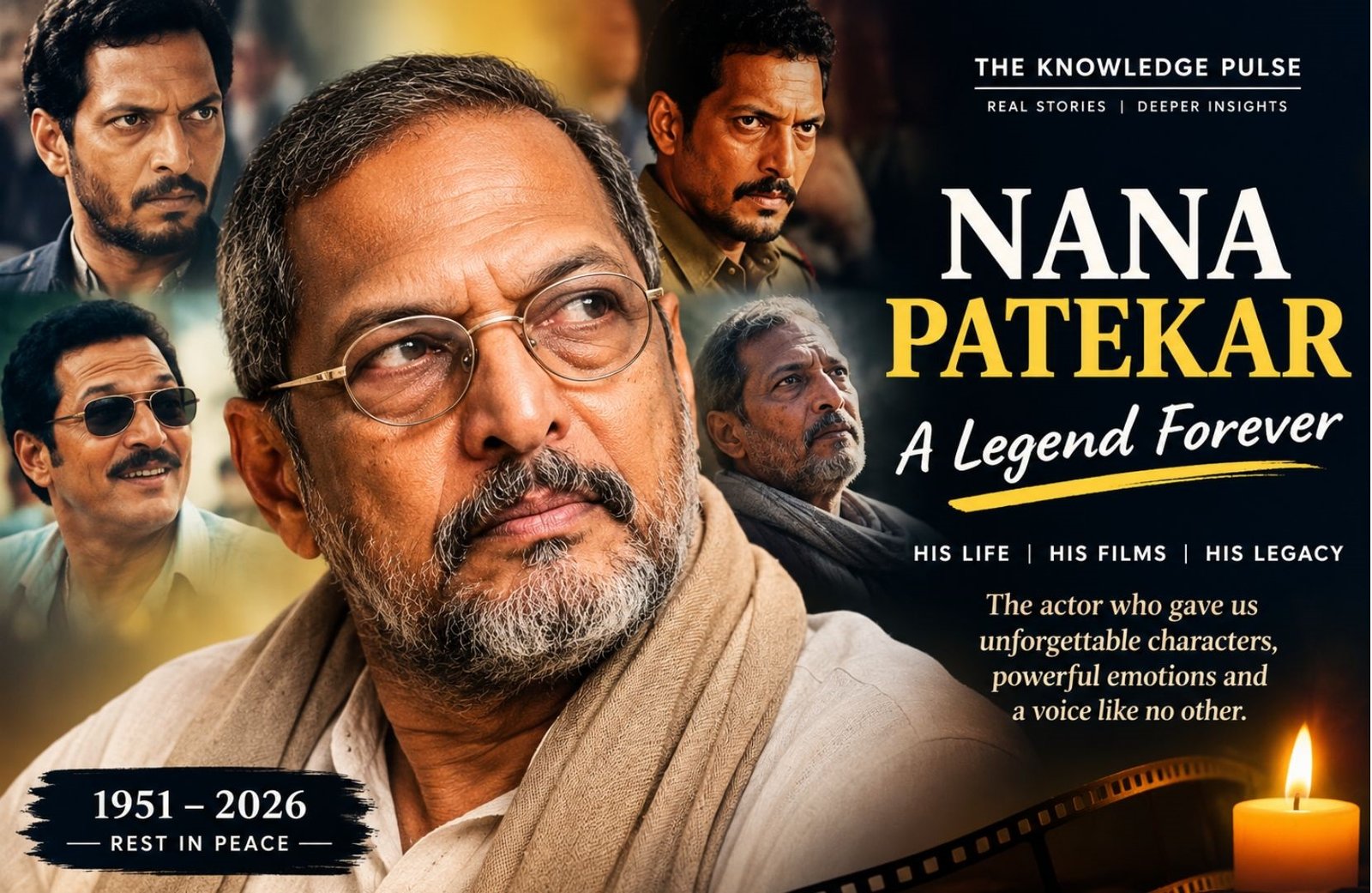
On October 8, 2026, Indian cinema waved a heartbreaking goodbye to one of its absolute originals. Nana Patekar passed away at 75 in Goa following a sudden cardiac arrest. For millions who grew up watching him command the silver screen through gritty dramas, powerful social statements, and unforgettable laughs, the news felt like a sudden punch to the gut.
Yet, Nana’s story goes way beyond a headline. It’s the journey of an everyday kid who carved his own path to greatness without ever losing touch with the ground beneath his feet. It’s a rich tale of relentless theatre struggles, cinematic triumphs, discipline, raw humor, social activism, and a fiery soul that refused to fit into any standard Bollywood box.
- What Happened to Nana Patekar?
- Who Was Nana Patekar?
- Early Life and Struggles
- Theatre: Where the Actor Was Born
- Nana Patekar’s Film Career
- The Films That Changed His Career
- Parinda and the Arrival of a Powerful Screen Presence
- Krantiveer and National Recognition
- The Unexpected Comic Side of Nana Patekar
- Natsamrat and His Marathi Legacy
- Smart Filmography Data & Masterpiece Matrix
- Why Nana Patekar’s Acting Was So Different
- The Voice That Became His Signature
- Awards and Major Honours
- Nana Patekar Beyond Cinema
- The Man Behind the Star
- What Nana Patekar Leaves Behind
- Life Lessons From Nana Patekar
- A Final Goodbye to Nana Patekar
What Happened to Nana Patekar?
Nana Patekar left for his heavenly abode on October 8, 2026, at the age of 75. According to reports pouring in from multiple media outlets, he was spending time at his home in Dona Paula, Goa, when he suddenly took ill during the early hours of Thursday morning.
Sources shared that Nana experienced sharp discomfort and pain on the left side of his chest. When he became unresponsive, he was immediately rushed to Manipal Hospital in Goa. Medical teams pulled out all the stops, giving him prolonged CPR, but sadly, they couldn’t bring him back.
His son, Malhar Patekar, stepped forward to confirm the heartbreaking news. The hospital later certified the cause of death as cardiac arrest, with standard post-mortem protocols initiated as part of official procedures.
The shock cut deep because Nana wasn’t just another popular face on a poster; he was embedded right into India’s cultural DNA. To one crowd, he was the intense, fiery force behind cult classics like Parinda and Krantiveer. To another, he was the hilarious, lovable Uday Shetty cracking us up in Welcome. To Marathi lovers, he was the absolute heartbeat of regional theatre and cinema. More than anything, he felt wonderfully, refreshingly real.
Who Was Nana Patekar?
Born Vishwanath Patekar, Nana grew up to become one of the most fiercely respected actors, filmmakers, and stage artists India has ever produced.
Originating from Maharashtra in 1951, he built a career that easily crossed boundaries. He conquered Hindi cinema, regional Marathi gems, and the demanding world of live theatre. He played it all—scary criminals, upright cops, gritty soldiers, passionate activists, broken fathers, lovable gangsters, and everyday folks caught in extraordinary chaos.
What set him miles apart was how effortlessly natural he felt. He didn’t need flashy costumes, designer wear, or over-the-top action stunts to own a frame.
Often, all it took was a simple chair, a quiet pause, a cigarette, and a handful of words.
That uncanny ability to make a movie frame feel utterly alive was his absolute superpower.
Early Life and Struggles
Long before the glittering awards, TV spotlights, and viral dialogue clips, there was a young man in Maharashtra quietly grinding his way through tough times.
Nana’s early life didn’t come with the cushioned privileges typical of movie stars. His path was carved through genuine hardship, hard-nosed discipline, and non-stop work ethics.
Those early scars and lessons bled seamlessly into his acting craft.
There was an earthy, unpolished grit to his performances. Even when he essayed powerful, high-ranking figures, they never felt detached from real-world grit. His acting carried the rough edges of actual life.
That’s probably why we felt such a deep bond with him. Nana didn’t always play the glamorous hero we wished we were; he played the complex human beings we actually knew.
The frustrated guy next door. The disappointed father trying his best. The fearless cop standing his ground. The shattered soul. The mobster with an odd sense of ethics. The common man pushed right to the edge of his patience.
His own life battles gave him a front-row seat to understand these human depths.
Theatre: Where the Actor Was Born
You can’t truly appreciate Nana Patekar without looking at his roots in the theatre circuit.
Long before celluloid fame came knocking, the stage sharpened his command over dialogue delivery, timing, physical presence, and emotional pacing.
Theatre is an unforgiving beast. There are zero second-chances or retakes. No clever camera angles can bail you out if you miss a beat. You have to lock eyes and connect directly with a live crowd.
Nana mastered that craft.
That theatre foundation became the secret sauce of his on-screen magic. Even when the camera lens was inches from his nose, his performance retained the explosive energy of a stage veteran who knew how to command a packed auditorium.
It’s also the secret behind why his dialogue delivery became legendary. He didn’t just memorize words; he understood the heavy silence hiding right before and after them.
Sometimes, a simple pause from Nana spoke louder than a 10-minute monologue from anyone else.
Nana Patekar’s Film Career
Stepping into Hindi cinema back in the late 1970s, Nana made his silver-screen entry with the film Gaman in 1978.
His rise wasn’t an overnight explosion of viral fame; it was a slow, deliberate burn built on solid credibility and an obvious appetite for unconventional, heavy-hitting roles.
He smoothly carved out a unique space bridging India’s intense parallel cinema movement with mainstream commercial Bollywood.
That crossover trick is notoriously hard to pull off.
Plenty of gritty, realistic art-house actors struggle to win over mainstream crowds. Nana bridged that gap effortlessly.
He could break your heart in a heavy social drama one weekend and leave you clutching your stomach from laughter in a blockbuster comedy the next.
That unmatched versatility defined his entire journey.
The Films That Changed His Career
While a bunch of early projects built his reputation as a powerhouse performer, a few massive milestones completely changed the game for him.
Masterpieces like Parinda, Krantiveer, and Agni Sakshi put his raw, terrifying emotional intensity on full display.
At the flip side of the coin, stepping into laugh-riots like Welcome introduced his genius to an entirely new generation of fans.
Being able to reinvent yourself completely without losing your core identity is the ultimate trademark of a legend.
Parinda and the Arrival of a Powerful Screen Presence
Vidhu Vinod Chopra’s gripping crime drama Parinda stands tall as a massive turning point in Nana’s career.
The movie painted a bleak, gritty, highly realistic picture of underworld crime. Nana played ‘Anna’—and he terrified audiences not because he ranted like a cartoonish movie villain, but because he felt completely unpredictable, unhinged, and psychologically chilling.
The industry took serious notice, showering him with critical acclaim and stamping his passport as one of India’s finest character actors.
Parinda proved a vital point: Nana didn’t need a squeaky-clean, heroic script to steal the spotlight.
He could take a dark, morally twisted character and make it legendary.
Krantiveer and National Recognition
If Parinda earned him critical respect, 1994’s Krantiveer turned him into a full-blown mainstream icon.
The movie dropped him into a firestorm of a role packed with raw anger, anti-establishment frustration, fierce patriotism, and social awakening.
Audiences fell in love with it because his character wasn’t a flawless superhero. He was deeply flawed, hot-headed, loud, and profoundly human.
That stellar performance bagged him the prestigious National Film Award for Best Actor.
It was a proud validation of what film critics and purists already knew: Nana Patekar wasn’t just another popular face—he was an acting force of nature with bottomless depth.
The Unexpected Comic Side of Nana Patekar
Hands down, one of the most delightful plot twists in Nana’s career was the world discovering his genius for comedy.
His unforgettable turn as the short-tempered don Uday Shetty in Welcome became a cultural goldmine of memes and laughs.
Technically, the character was a ruthless gangster, but Nana played him with such deadpan comic timing that people remember the laughs way more than the crime.
His iconic chemistry with Anil Kapoor (Majnu Bhai) cooked up some of the funniest cinematic gold in modern comedy history.
The genius of Uday Shetty was simple: Nana never played it like a cheesy comedian trying to get a cheap laugh.
He played it straight. Completely deadpan.
And that absolute seriousness made the comedy ten times funnier. Dropping absurd, hilarious lines with the grim intensity of a murder mystery created pure magic.
It served as a masterclass reminder that true acting isn’t about locking yourself in a single genre—it’s about understanding human absurdity.
Natsamrat and His Marathi Legacy
Nana’s bond with Marathi cinema was sacred to his soul as an artist.
One of his crowning achievements later in life was headlining the Marathi masterpiece Natsamrat, inspired by V. V. Shirwadkar’s legendary play.
The script felt custom-built for him.
An aging theatre legend grappling with the bitter emotional aftermath of a life spent under the spotlights.
An actor playing an actor. A stage veteran portraying a stage veteran.
A seasoned artist looking back at his own life’s curtain call.
For millions, Natsamrat transcended cinema—it became a poetic reflection on growing old, family neglect, personal pride, unyielding dignity, and the heavy emotional toll an artist pays when he gives his whole soul to his craft.
Smart Filmography Data & Masterpiece Matrix
Explore this detailed breakdown of Nana Patekar’s most iconic cinematic milestones, highlighting genres, character roles, and top-tier recognitions:
| Film Title | Year | Genre / Style | Character / Role Highlight | Key Accolade / Status |
|---|---|---|---|---|
| Gaman | 1978 | Parallel Drama | Vasoo (Early breakthrough appearance) | Debut Milestone |
| Parinda | 1989 | Crime Thriller | Anna Seth (Unpredictable, chilling underworld don) | Filmfare Award |
| Prahaar: The Final Attack | 1991 | Action / Military | Major Pratap Chauhan (Director & Lead Commando) | Cult Classic |
| Krantiveer | 1994 | Social Drama | Pratap Tilak (Angry, patriotic common man) | National Film Award |
| Agni Sakshi | 1996 | Psychological Thriller | Vishwanath Nair (Abusive, obsessive husband) | National Film Award |
| Khamoshi: The Musical | 1996 | Emotional Drama | Joseph Braganza (Affectionate deaf-mute father) | Critical Acclaim |
| Ab Tak Chhappan | 2004 | Encounter Thriller | Sadhu Agashe (Gritty, determined encounter cop) | Masterclass Performance |
| Welcome | 2007 | Slapstick Comedy | Uday Shetty (Deadpan, lovable don) | Massive Blockbuster |
| Natsamrat | 2016 | Marathi Masterpiece | Ganpatrao Belwalkar (Aging tragic theatre actor) | Historic Regional Landmark |
Why Nana Patekar’s Acting Was So Different
Nana didn’t do slick, calculated, conventional acting.
His performances were raw.
Sometimes they made you squirm in your seat.
They could flip from calm to explosive in a heartbeat.
And other times, they were breathlessly quiet.
That element of surprise was his signature weapon.
When Nana walked onto a set, viewers never knew what was coming next.
Would he scream?
Would he chuckle?
Would he shoot a cold glare?
Would he stay completely mute?
Would his character break down right there?
That suspense glued audiences to their seats. He knew deep down that acting isn’t just reciting lines; it’s conjuring a living, breathing person.
He Used Silence as an Acting Tool
One of his most underrated superpowers was his mastery of quiet moments.
While many actors panic and try to fill every silence with dialogue, Nana let the quiet breathe.
A sharp glance did the job of an argument.
A tiny pause translated raw fear.
A subtle twitch communicated deep heartbreak.
That’s the kind of performance that refuses to leave your head.
The Voice That Became His Signature
You simply cannot talk about Nana without talking about *that* voice.
It was instantly recognizable from the second he spoke a syllable.
Deep, gravelly, sharp, and capable of shifting emotional gears in seconds—it became his ultimate trademark.
Yet, the voice alone wasn’t the whole trick. It was his masterful control over it.
He knew precisely when to boom like thunder and when to drop down to a raspy whisper. He knew how changing the rhythm of a sentence completely altered its meaning.
That’s why even the most basic line sounded like poetry when it rolled off his tongue.
Awards and Major Honours
The industry and the nation showered Nana with some of their highest accolades.
His trophy shelf boasts three National Film Awards, a testament to his unmatched range and consistency.
The Government of India honored him with the Padma Shri, recognizing his massive contribution to the cultural landscape.
However, awards only tell half the tale.
The truest measure of his legacy is how many of his characters people still quote word-for-word decades later.
Trophies sit in history books.
Iconic characters live on in everyday conversations.
Nana had a surplus of both.
Nana Patekar Beyond Cinema
A lesser-known yet deeply inspiring side of Nana’s life was his tireless grassroots social work.
He rolled up his sleeves to support struggling farmers and rural drought-hit communities, especially across rural Maharashtra.
Alongside actor Makarand Anaspure, he poured his heart into building the Naam Foundation, offering direct relief to farming families crushed by severe hardships.
This side of Nana stood miles away from the glamorous, detached bubble associated with stardom.
He routinely spoke truth to power regarding agrarian struggles and the silent daily fights of ordinary rural citizens.
His genuine empathy for these causes gave his public persona an extra layer of respect.
The Man Behind the Star
There was always something refreshingly eccentric about Nana’s relationship with fame.
Despite hitting massive heights of commercial success, he never adopted the pampered, disconnected lifestyle of a typical Bollywood heavyweight.
Interviews and local reports over the years highlighted his down-to-earth preferences—preferring simple living, farming, and staying close to nature.
He loved cooking his own meals and keeping a lifestyle that felt astonishingly humble for a megastar.
That stark contrast made fans love him even more.
How could an award-winning icon remain so deeply rooted in ordinary routines?
The answer lay in his backstory.
Nana never forgot what life looked like before the flashbulbs started popping.
He knew the taste of hard labor.
He knew what it meant to scrape by without the cushion that fame eventually brings.
And that is precisely why his characters felt like flesh-and-blood human beings instead of polished studio constructs.
What Nana Patekar Leaves Behind
Whenever a giant passes away, people ask: What will they be remembered for?
For Nana, the list is wonderfully endless.
He’ll be remembered for that gravelly voice.
He’ll be remembered for those expressive eyes.
He’ll be remembered for fiery, room-shaking monologues.
He’ll be remembered for chilling cinematic villains.
He’ll be remembered for cracking us up as Uday Shetty.
He’ll be remembered as the voice of the frustrated common man.
He’ll be remembered as a pioneer of Marathi stage and screen.
He’ll forever be our Natsamrat.
Simply put, he’ll be remembered as Nana—an original who broke the mold and threw away the pieces.
That is the ultimate badge of honor for any artist.
Life Lessons From Nana Patekar
Nana’s journey leaves behind blueprints for life that stretch way past movie making.
1. You Don’t Need a Molded Hero Face to Be a Legend
Nana ignored the cookie-cutter playbook of Bollywood good looks.
He proved that raw talent, unshakeable authenticity, and fierce individuality create a far more powerful brand of stardom.
2. Your Hardships Are Your Superpower
The struggles of his youth didn’t break him; they turned into the deep well of empathy and grit he poured into his art.
3. Reinvention Keeps You Relevant
He bounced seamlessly between dark dramas, slapstick comedy, Hindi hits, and regional masterpieces without ever losing his unique voice.
4. Authenticity Beats Polish Every Time
His performances weren’t about looking pretty or pristine.
They were about feeling hauntingly real.
5. Fame Shouldn’t Own Your Life
His deep love for farming, social activism, and a quiet rural lifestyle proved that a grounded soul can survive superstar status intact.
6. Great Characters Outlive Their Creators
This is the ultimate takeaway.
Actors eventually step down.
Movie prints fade with time.
But unforgettable characters live forever.
People will keep quoting them, laughing at them, and studying them for generations.
Nana built an army of those characters.
A Final Goodbye to Nana Patekar
Losing Nana Patekar isn’t just the fading of a famous name; it’s the closing of a golden chapter in Indian entertainment history.
For nearly five decades, he handed audiences characters that defied easy labels.
Sometimes he gave us chills.
Sometimes he doubled us over with laughter.
Sometimes he forced us to check our own privileges.
Sometimes he made us think deeply.
And other times, without uttering a single syllable, he made our hearts drop.
That is the exact line separating a working actor from a true artist.
Nana Patekar was an artist, through and through.
He wasn’t flawless—no human life is. Like all public figures, his journey faced its share of debates, raw moments, and criticisms. But his contribution to Indian art remains bulletproof.
He gifted us an intimate, deeply personal style of performance. Nobody else rumbled quite like him. Nobody channeled righteous fury quite like him. Nobody could pivot from a terrifying mob boss to a lovable comedy don quite like Nana.
That’s why his departure hurts so many.
Millions didn’t share coffee with Nana Patekar.
Yet, everyone knew his characters.
Everyone knew his cadence.
Everyone knew his micro-expressions.
Everyone recognized that special electric jolt that hit the room the moment he appeared on screen.
Nana Patekar may have left the stage, but the vibrant souls he breathed life into will keep talking to us.
His movies will keep playing on loop. His iconic lines will keep echoing in college dorms and family living rooms. His craft will be studied by aspiring actors for decades. And future generations who missed his prime will still stumble upon his genius and wonder in awe.
Some stars burn bright and fade fast. Some actors earn a footnote in history books. Nana Patekar etched himself permanently into the human heart.
Rest in peace, Nana Patekar.
Thank you for the characters, the tears, the laughs, the fire, and the unforgettable memories.
Remembering Nana Patekar: A Career in Brief
Nana Patekar is born in Maharashtra.
Makes his Hindi film debut with Gaman.
Builds a stellar reputation through intense theatre and parallel cinema.
Parinda explodes as a defining milestone in his career.
Krantiveer cements mainstream superstardom alongside a National Film Award win.
Continuously shifts between gritty dramas and commercial blockbusters.
Welcome introduces a whole new generation to his peerless comic timing as Uday Shetty.
Natsamrat delivers a career-crowning Marathi performance.
Nana Patekar passes away at 75 in Goa, leaving behind an immortal legacy.
The Real Meaning of a Legacy
A true legacy isn’t measured in trophy counts.
It isn’t a math equation of box office collections.
It isn’t the size of your bank account.
A genuine legacy is the emotional ghost that lingers in people’s minds long after the theater lights come back on.
Nana left behind precisely that kind of magic.
A kid watching Welcome years from now will still crack up at Uday Shetty.
Someone pressing play on Parinda for the first time will still freeze at his chilling intensity.
Someone viewing Krantiveer will still feel the raw electricity of his anger.
And someone experiencing Natsamrat will still weep at the naked vulnerability of an aging artist.
That is the timeless spell of cinema.
The actor takes a bow and exits.
The character stays behind forever.
And Nana created an entire gallery of characters that are here to stay.
Editorial Note: This piece has been prepared as an affectionate tribute to Nana Patekar following the heartbreaking news of his passing on October 8, 2026. Details concerning his final moments are drawn from verified reports across leading news outlets and remain subject to updates as official information develops.
Reviewed by The Knowledge Pulse Research Team