Why 90% of Forex Traders Blow Up in 6 Months
Look at almost any retail trading statistic globally — and the pattern is clear:
Most forex accounts do not survive beyond six months.
Not because forex is a scam.
Not because markets are random.
But because retail traders underestimate structural risk.
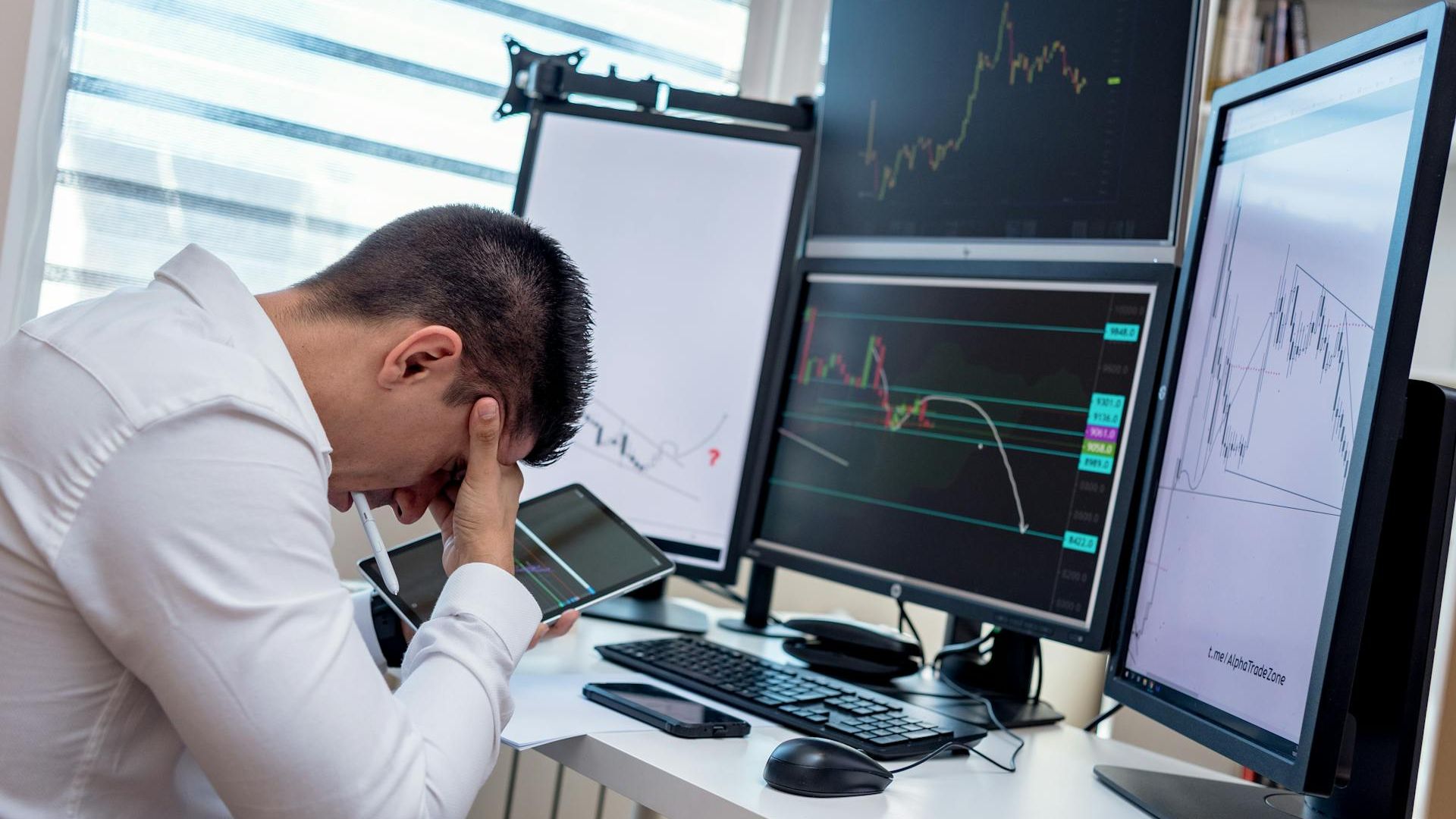
As seen in the red trading chart above, account failure usually begins quietly — with small risk miscalculations that compound faster than profits.
Let’s break this down using logic, math, and execution reality.
In This Article
- The 6-Month Failure Pattern (What Really Happens)
- The Leverage Trap (Mathematical Breakdown)
- The Real Reason: Risk Per Trade Is Too High
- Overtrading: The Silent Account Killer
- Spread, Slippage & Execution Friction
- Emotional Trading Amplifies Structural Weakness
- The 55% Win Rate Illusion
- The Drawdown Spiral Explained
- Why Indian Retail Traders Face Extra Risk
- How to Survive Beyond 6 Months in Forex
- Final Reality Check: Survival Over Profits
- Frequently Asked Questions (FAQ)
The 6-Month Failure Pattern (What Really Happens)
Most new traders follow this timeline:
Month 1
- Excitement
- High leverage
- Fast profits (sometimes)
Month 2–3
- Overconfidence
- Increased position size
- No strict risk model
Month 4
- First major drawdown
- Emotional trading begins
Month 5–6
- Revenge trading
- Margin calls
- Account blown
The market didn’t change.
Behavior did.
The Leverage Trap (Mathematical Breakdown)
Many traders focus on:
“Which broker gives 1:500 leverage?”
But leverage is not power. It is risk acceleration.
Example:
Account size: $1,000
Leverage: 1:500
Position: 1 lot EUR/USD
1 pip ≈ $10
A 50-pip move against you = $500 loss
That’s 50% of account in one move.
Two bad trades → account gone.
High leverage compresses survival time.
The Real Reason: Risk Per Trade Is Too High
Professionals risk:
1–2% per trade.
Retail traders risk:
10–30% per trade.
Let’s compare.
If you risk 20% per trade and lose 5 trades in a row:
Remaining capital =
100 → 80 → 64 → 51 → 41 → 33
You’ve lost 67% in just five trades.
Now you need 200% return to recover.
This is why most forex accounts fail — not because of strategy, but because of risk concentration.
Overtrading: The Silent Account Killer
Many traders believe:
More trades = more profit.
Reality:
More trades = more spread cost
More slippage exposure
More emotional decisions
If you take 100 trades per month with:
- 1.5 pip spread
- Average 1 pip slippage
You’re paying enormous friction before profit even begins.
Execution costs quietly eat edge.
Spread, Slippage & Execution Friction
This is the part most traders ignore.
Even profitable systems fail when:
- Spread widens during volatility
- Slippage increases during news
- Orders execute slowly
If your stop-loss is 20 pips but slippage adds 5–8 pips, your entire risk model collapses.
Many traders blame strategy.
Often, execution quality is the hidden variable.
That’s why serious traders evaluate:
- Average spread stability
- Slippage during NFP & CPI
- Liquidity depth
- Order execution speed
For example, I personally prefer brokers that offer:
- Raw spreads
- Transparent commission
- Deep liquidity
- Low latency execution
One example of a true ECN execution infrastructure with raw spread access can be reviewed here.
Not because of marketing promises — but because infrastructure matters when real money is on the line.
Always test execution during volatile sessions before committing capital.
Emotional Trading Amplifies Structural Weakness
Even with a good broker and proper risk model, psychology can destroy accounts.
Common behavioral errors:
- Moving stop-loss
- Doubling down after loss
- Trading without setup
- Ignoring risk-reward ratio
- Increasing lot size to “recover”
Losses are part of trading.
Uncontrolled reactions are not.
The 55% Illusion
Many strategies win 55% of the time.
That sounds good.
But if:
- Risk-Reward = 1:1
- Spread + slippage = 3–5 pips
- Overtrading occurs
Your real win rate after cost becomes much lower.
Edge disappears quietly.
This is how accounts bleed slowly before blowing up.
The Drawdown Spiral
Here’s what typically happens:
- Trader loses 20%
- Increases risk to recover
- Slippage during volatility worsens loss
- Margin level drops
- Emotional decisions take over
At this stage, mathematics works against the trader.
Once drawdown exceeds 50%, recovery becomes exponentially difficult.
That’s why survival > profits in early months.
Why Indian Retail Traders Face Extra Risk
Indian traders often:
- Start with small capital
- Use maximum leverage
- Trade during US news hours
- Don’t measure execution quality
- Choose broker based on bonuses
Small accounts + high leverage + volatility = compressed survival time.
The problem is not the market.
It is structure.
How to Survive Beyond 6 Months
If your goal is long-term consistency:
1️⃣ Risk 1–2% per trade
2️⃣ Avoid trading major news unless experienced
3️⃣ Measure real spread & slippage
4️⃣ Reduce overtrading
5️⃣ Track drawdown weekly
6️⃣ Focus on capital preservation
Professional traders focus on:
Staying in the game.
Because without capital, skill doesn’t matter.
Final Reality Check
Forex is not designed to destroy traders.
But poor structure destroys accounts.
When you combine:
- Excess leverage
- High risk per trade
- Execution friction
- Emotional decision-making
Six months becomes the natural lifespan of a retail account.
The solution is not a new indicator.
It is discipline + math + execution awareness.
Survival first. Growth later.
Frequently Asked Questions (FAQ)
❓Why do most forex traders lose money?
Most traders lose because they risk too much per trade, overleverage their accounts, and fail to account for spread and slippage costs.
❓Is the 90% forex failure rate real?
While exact percentages vary, global broker disclosures consistently show that a large majority of retail accounts lose money due to risk mismanagement and leverage misuse.
❓How long does the average forex account last?
Many small retail accounts last between three to six months before experiencing major drawdowns or margin calls.
❓Can good execution prevent account blow-ups?
Execution alone cannot guarantee profits, but stable spreads, low slippage, and deep liquidity reduce unnecessary trading friction.
❓What is the safest way to trade forex as a beginner?
Start with low leverage, strict 1–2% risk per trade, demo testing, and careful broker evaluation before scaling position size.