Best Time to Trade Gold (XAUUSD): London, New York & High-Volatility Sessions
When is gold actually worth watching? Learn how the London open, New York overlap, economic releases and market liquidity affect XAUUSD trading opportunities—and why the busiest hour is not always the best hour to enter.
The gold market does not move at the same speed throughout the day. A quiet consolidation in Asia can become a decisive breakout when European traders arrive. A promising London trend can accelerate—or reverse—when the United States releases inflation data. Meanwhile, an apparently attractive late-session move may suffer from thinner liquidity, changing spreads and a higher chance of abrupt price gaps.
For XAUUSD traders, the useful question is not simply “What time does gold move most?” It is “Which trading window best fits my strategy, risk tolerance, broker conditions and ability to monitor the market?” This guide offers a practical way to answer that question without pretending that one session guarantees profits.

Explore this guide — quick navigation
- The short answer
- Gold trading sessions explained
- London and New York in IST
- Why the London session matters
- London–New York overlap
- New York data and price reactions
- Is the Asian session useful?
- Volatility versus opportunity
- Economic calendar checklist
- Best sessions by trading style
- Common timing mistakes
- A repeatable session plan
- Using session controls in an EA
- Frequently asked questions
What Is the Best Time to Trade Gold? The Short Answer
For many active intraday XAUUSD traders, the London session and the London–New York overlap deserve the closest attention. These windows often bring greater participation and more active price discovery than the quieter parts of the day. However, the precise behavior varies with economic releases, holidays, broader risk sentiment and the market’s existing structure.
Practical takeaway: Watch London for developing directional moves; watch the London–New York overlap for potential continuation or reversal; and treat scheduled U.S. data as a separate event-risk decision. A strong setup is more important than the clock alone.
There is no universally profitable hour. A trend-following strategy may benefit from expanding volatility, while a range strategy may prefer calmer conditions. The same 20-minute window can offer an orderly breakout on one day and a series of false breaks on another.
Understand the Three Major Gold Trading Sessions
Spot gold trades across a global, nearly 24-hour weekday market through banks, liquidity providers and brokers. The familiar Asian, London and New York sessions are activity windows, not three separate gold exchanges opening and closing at a single official time. Broker trading hours, daily maintenance breaks and holiday schedules can differ.
| Session | Typical character | What to watch |
|---|---|---|
| Asian / Tokyo hours | Sometimes more measured, but not always quiet | Overnight range, regional news, early support and resistance |
| London / European hours | New European participation can increase momentum | Breaks of the Asian range, retests, trend formation |
| New York / U.S. hours | Important U.S. macro releases and substantial cross-market activity | Dollar and yield reactions, continuation, reversals, liquidity shifts |
The most useful session label is one you can align with your own chart and broker clock. A trading platform may show server time, local computer time or exchange-based chart time; these are not necessarily interchangeable. Confirm the displayed timezone before configuring alerts or automated trading hours.
Gold Trading Session Times in India (IST): A Practical Reference
If you trade from India, the daylight-saving change in the United Kingdom and United States matters. London and New York shift relative to IST during the year. The table below uses approximate local business-session windows as an orientation, not a guarantee of gold liquidity or exact broker availability.
| Reference window | When standard time applies | When daylight time applies |
|---|---|---|
| London 08:00–17:00 local | 13:30–22:30 IST (GMT) | 12:30–21:30 IST (BST) |
| New York 08:00–17:00 local | 18:30–03:30 IST next day (EST) | 17:30–02:30 IST next day (EDT) |
| Illustrative London–NY shared business hours | 18:30–22:30 IST when both are on standard time | 17:30–21:30 IST when both are on daylight time |
Important: U.S. and U.K. daylight-saving changes happen on different dates, creating transition weeks when the overlap differs from either typical row. In addition, commonly quoted forex-session windows vary by publisher and do not represent an official XAUUSD opening bell. Always confirm current London and New York local time before acting.
ForexDevice’s own Morning, London and New York research reports use editorial publishing windows in IST. Those reporting labels are designed for consistent updates; they are not claims about the official opening or closing of the corresponding financial markets.
Why the London Session Attracts Gold Traders
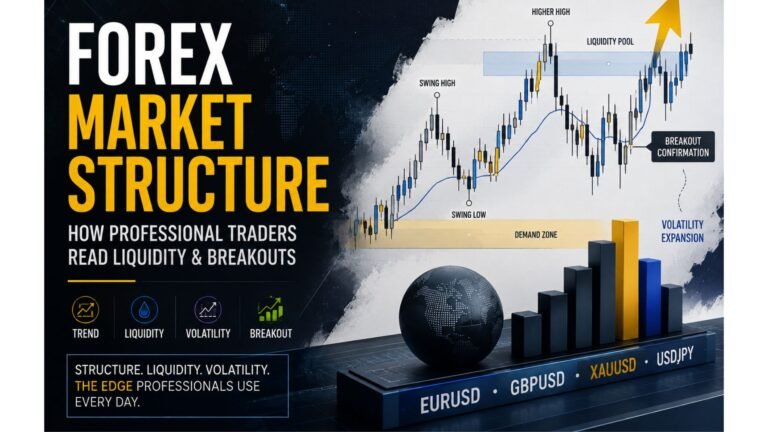
London is a major global center for precious-metals trading. When European participants become active, gold may move beyond the price boundaries established earlier in the day. This makes the London morning a useful period to study range expansion, but the first break of a level should not automatically be treated as a valid entry.
Look for a meaningful break—not just a wick
Suppose XAUUSD spends several hours between 3,560 and 3,580. A move above 3,580 might be the beginning of an expansion, or it might be a brief liquidity sweep before price returns inside the range. A disciplined trader checks whether candles close beyond the boundary, whether the retest holds, and whether the higher timeframe supports the direction. These numbers are illustrative, not current market levels.
Watch the structure established before London
Mark the Asian high and low, the prior day’s high and low, and the nearest higher-timeframe reaction zones. If London opens directly beneath major resistance after an extended rally, a breakout may face different odds than one occurring after a well-formed base. Price context should determine whether you trade, wait or stand aside.
London session checklist: Identify the overnight range; note the 1H and 4H direction; wait for a clear 15M trigger; confirm spread and execution conditions; and define invalidation before entering.
The London–New York Overlap: More Activity, More Decisions
The period when European and U.S. trading activity overlap is often highlighted as a key window for intraday gold. Participation from both regions can coincide with major U.S. releases, creating fast price movement. That can benefit strategies built for volatility, but it can also increase slippage and the likelihood of sharp reversals.
When overlap helps
A clear higher-timeframe trend, a tested breakout level and orderly execution can make the overlap a productive time to look for continuation setups.
When overlap hurts
Unscheduled headlines, a major data surprise or a stretched move into resistance can turn an apparent breakout into a whipsaw.
Do not assume every overlapping hour is equally liquid. The most important variable may be the timing of a specific economic release or the opening of a related U.S. market. If your broker quotes widen or order fills deteriorate, a high-volume period may still be unsuitable for your system.
A practical approach is to divide the overlap into three stages: pre-event preparation, event response and post-event confirmation. Trading the reaction after the initial volatility settles may be more appropriate than trying to predict the first tick.
New York Session: U.S. News Can Change Gold’s Direction
Gold responds to a network of drivers rather than a single headline. U.S. inflation, employment, Federal Reserve communication, Treasury yields and dollar strength can all influence market expectations. Their effects are conditional: a strong U.S. number does not mechanically guarantee that gold will fall, and a weak number does not guarantee a rally.
During a major announcement, gold can initially surge in one direction, reverse within minutes and then settle into a different trend. Traders who enter solely because the first candle is large may face the worst combination of poor entry location and rapidly changing execution costs.
Read the reaction, not just the headline
Before the release, identify nearby levels and your maximum acceptable spread. After the release, ask whether price is holding above or below those levels and whether the move is consistent across the 15M and 1H charts. If the candles are unusually wide or the market is jumping between levels, doing nothing is a valid trading decision.
Is the Asian Session a Bad Time to Trade XAUUSD?
No. Calling the Asian session “bad” overlooks the strategies that rely on calmer price behavior and the days when regional developments generate major moves. Gold can react to Asian economic news, geopolitical events, changes in the dollar and positioning carried over from the prior U.S. session.
For a breakout trader, the Asian session can be useful even without an entry: it helps define the reference range that London may later challenge. For a range trader, quieter conditions may offer cleaner boundaries, but only if spreads remain reasonable and the market is not awaiting a major catalyst.
The better question is whether the session’s behavior matches the strategy you have tested. If your rules require strong directional expansion, a low-activity period may simply offer fewer valid setups. That is not a reason to force trades.
High Volatility Does Not Automatically Mean High-Quality Trades
Volatility measures how far or how quickly price moves. Trade quality also depends on structure, liquidity, spreads, execution and the distance to your invalidation level. A fast market can produce attractive charts while making real-world entries much harder.
| Market condition | Potential advantage | Main risk |
|---|---|---|
| Orderly directional expansion | Trend-following and breakout opportunities | Entering too late after an extended move |
| Sideways consolidation | Clearly defined boundaries and risk levels | False breaks and repeated stop-outs |
| News-driven price spike | Rapid movement through key levels | Slippage, spread widening and reversals |
| Thin or irregular trading | Occasional sharp moves | Less reliable fills and erratic price action |
Use the Average True Range (ATR), recent candle size and your broker’s live spread as supporting information—not substitutes for price action. An unusually large candle may signal opportunity, exhaustion or simply elevated uncertainty. Its location relative to support and resistance matters more than its size alone.
Economic Calendar: What to Check Before Trading Gold
One of the simplest ways to avoid preventable surprises is to review the economic calendar before every active session. This is especially important if you use pending breakout orders, short stop-loss distances or automated execution.
- U.S. CPI and PCE inflation: Can reshape interest-rate expectations and real-yield pricing.
- U.S. employment data: Nonfarm payrolls, unemployment and wage figures can trigger rapid repricing.
- Federal Reserve decisions and speeches: Rate guidance and policy language can move the dollar, yields and gold.
- Major geopolitical developments: Can change safe-haven demand without a scheduled calendar event.
- Public holidays and unusual market hours: May reduce liquidity even during normally active sessions.
Record the event’s actual release time in your chosen timezone. Do not rely on an old screenshot of a calendar or assume every release occurs at the same IST time year-round. If you cannot monitor a major event, consider staying flat or using a pre-tested rule that explicitly accounts for the risk.
Which Gold Trading Session Fits Your Strategy?
The best trading hours depend on what your strategy needs to work. A session should be selected because it repeatedly produces suitable conditions in your own data—not because another trader calls it the “golden hour.”
| Trading style | Window worth testing | What confirms suitability |
|---|---|---|
| Breakout trading | London opening activity; London–NY overlap | Range break, candle close, retest, acceptable execution |
| Trend continuation | Active London and New York periods | Higher-timeframe alignment and orderly pullback |
| Range trading | Calmer periods, including parts of Asia | Repeated respect of range boundaries and controlled spreads |
| News trading | Only around relevant scheduled events | Specialized testing, slippage assumptions and strict risk limits |
| Swing trading | Session timing is secondary | 4H/daily structure, event risk and overnight exposure |
For an intraday trader using the 4H chart as context, the 1H chart for structure and the 15M chart for execution, the workflow might be: define the higher-timeframe bias before London; mark the current decision zone; then wait for a confirmed setup during an active window. A conflicting 4H trend or a nearby major release is a reason to reduce activity, not manufacture a trade.
Seven Common Mistakes When Choosing Gold Trading Hours
- Trading only because a session has opened. The clock does not create a valid entry.
- Ignoring daylight-saving changes. London and New York shift relative to IST, sometimes on different weeks.
- Confusing broker server time with local time. This can misalign automated trading schedules.
- Buying or selling the first news spike. The initial move may reverse and execution may deteriorate.
- Assuming volatility equals profitability. Large moves can be expensive to trade.
- Overtrading after a missed breakout. Chasing price often worsens the reward-to-risk relationship.
- Ignoring Friday and holiday conditions. Liquidity, holding costs and weekend gap risk can change the trade.
Many of these mistakes have one root cause: treating market hours as a signal rather than as context. A repeatable plan needs both timing and an independently valid setup.
A Practical 15-Minute Pre-Session Gold Trading Plan
Use this routine before the London session or your chosen New York trading window. It is intentionally simple enough to repeat and detailed enough to keep decisions consistent.
- Check the live quote and timestamp. Confirm that your chart and broker are showing current prices. Start with the ForexDevice live gold price page.
- Read the 4H trend. Identify whether the market is making higher highs, lower lows or a broad range.
- Mark 1H support and resistance. Note prior session extremes, reaction zones and nearby invalidation levels.
- Inspect the 15M structure. Look for a breakout and retest, a failed break or a clear reason to wait.
- Review the economic calendar. Note scheduled releases, holidays and the correct timezone.
- Check execution costs. Compare spread and expected slippage with what your plan permits.
- Write both scenarios. What would support a bullish continuation? What would confirm bearish pressure?
- Set a maximum loss. Define position size and stop placement before any order is placed.
Example, not a live signal: If the 4H trend is bearish and price rebounds toward 1H resistance during London, a trader might wait for a 15M rejection and breakdown. A clean break above resistance would invalidate that bearish idea. Either way, the decision comes from evidence, not the session label.
For a current, chart-based context, see the ForexDevice Daily XAUUSD Research archive. For the broader decision process, read Should You Buy or Sell Gold Today?
Can an XAUUSD Trading Robot Use Session-Based Rules?
Yes. Automated trading systems can be configured to permit or restrict new entries during selected hours, subject to the features of the specific Expert Advisor. This can help traders apply a consistent schedule rather than making discretionary decisions about every session. It does not remove market risk or guarantee that a session-based strategy will be profitable.
ForexDevice GoldPulse Pro Plus is built around configurable XAUUSD breakout order management and risk controls. Its time settings can help define when the EA is permitted to trade, including a choice of time basis. Before using them, verify your broker’s server time, daylight-saving behavior and the intended treatment of existing positions and pending orders.
Read the GoldPulse strategy logic and parameter guide before changing a live setup. Backtest the same trading hours with realistic spreads, slippage and market conditions, and use a demo account to verify that the configured time basis behaves as expected.
Automation is most useful when it enforces a strategy that already has clear entry, exit and risk rules. A robot cannot turn an unsuitable market environment into a reliable trading opportunity simply by trading during the busiest hours.
Frequently Asked Questions About Gold Trading Hours
What is the best time to trade XAUUSD in India?
Many intraday traders monitor the London session and London–New York overlap. In IST, the relevant hours change when the U.K. and U.S. switch between standard and daylight time. Use the time table above as an orientation, then verify the current local clocks and your broker’s trading hours.
Is the London or New York session better for gold?
Neither is universally better. London can offer range expansion and emerging trends; New York can bring important U.S. macroeconomic catalysts and continuation or reversal. Test the window that fits your strategy and execution conditions.
Does gold trade 24 hours a day?
Spot gold is generally available across most of the weekday global trading cycle, but exact broker hours, maintenance breaks, holidays and weekend closures vary. Check the XAUUSD symbol specifications with your broker.
Is the London–New York overlap always the most volatile period?
It is often active, but not always the most volatile period on every day. A major scheduled release, geopolitical event or unexpected headline can generate larger movement at another time.
Should beginners trade gold during major news?
Beginners should be particularly cautious. Rapid moves, spread changes and slippage can make execution difficult. Observing the reaction and waiting for conditions to stabilize may be more appropriate than trying to predict the first move.
Can I set a trading EA to run only during London or New York?
Many EAs support session restrictions, but implementation varies. Verify the chosen timezone, daylight-saving changes, broker server time and how the EA handles orders at the session boundary. Test the configuration before using real funds.
What timeframe should I use for trading gold sessions?
There is no single best timeframe. One practical combination is 4H for broad context, 1H for market structure and 15M for execution. Use a combination that matches your strategy and risk limits.
Turn Market Hours Into a Better Trading Routine
The best time to trade gold is the time when your tested strategy, market structure and execution conditions align. Use session timing to narrow your attention—not to force a prediction.
ForexDevice publishes fresh XAUUSD research across its Morning, London and New York reporting windows. Follow the charts, compare levels and develop your own repeatable trading plan.
Educational content only. Gold and leveraged CFD trading involve substantial risk. Market behavior, spreads and execution vary by broker and conditions. Review the ForexDevice risk disclosure before trading.