IC Markets 2026 Breakdown: Equinix NY4 Latency, ECN Depth & Spreads
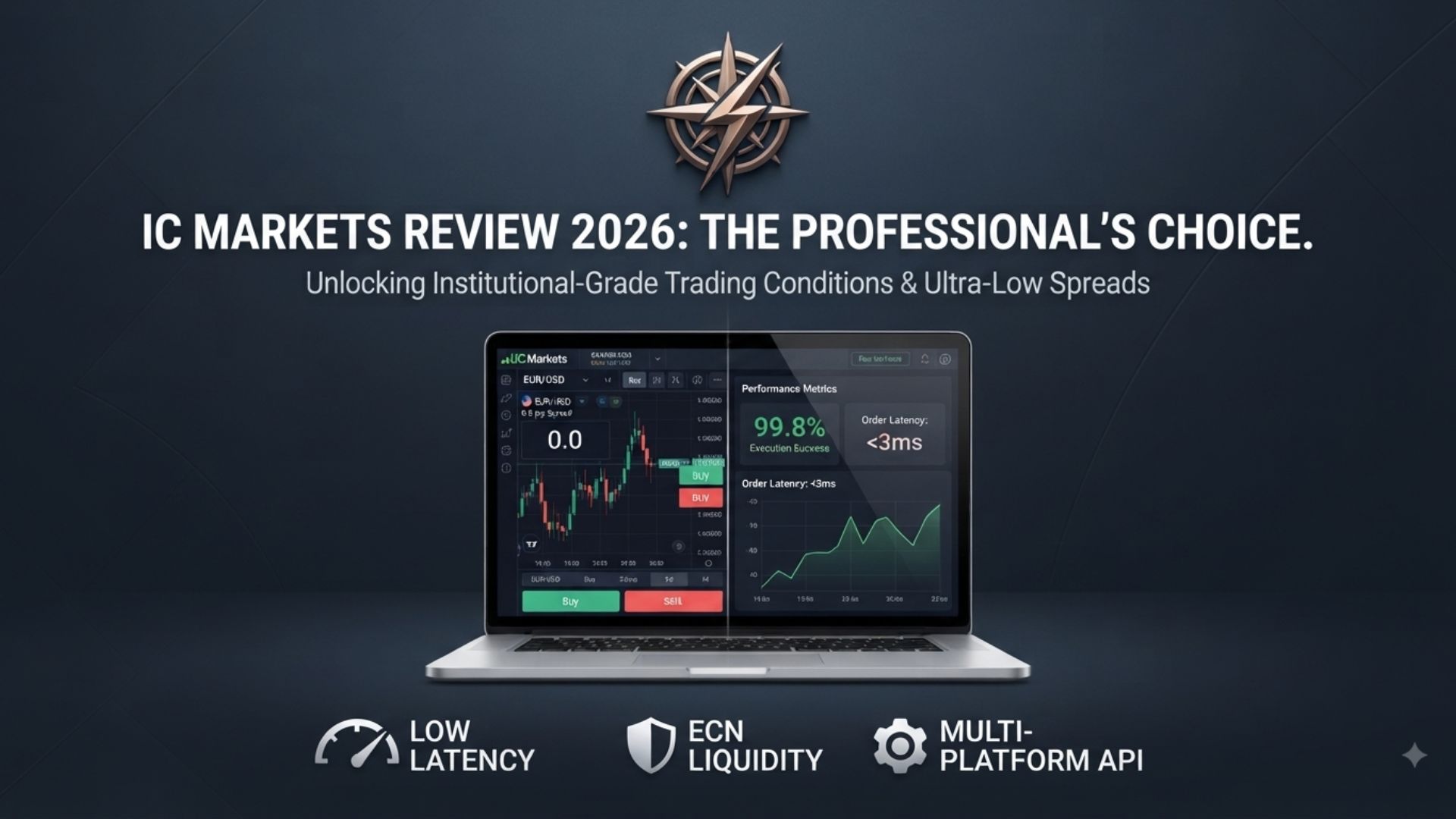
Table of Contents
Introduction: Finding Your Edge in 2026
Navigating the modern foreign exchange and CFD market requires more than just a sound strategy; it demands an institutional-grade technological backbone. In an era where slippage can destroy a profitable month and high trading costs eat away at fine margins, professional and retail day traders alike are increasingly scrutinizing their broker choice. Among the prominent names in the industry, IC (widely recognized globally for its deep institutional roots) has consistently drawn attention for prioritizing raw infrastructure over superficial marketing gimmicks.
Whether you are an algorithmic trader deploying Expert Advisors (EAs), a fast-paced scalper capturing micro-pips, or a discretionary swing trader managing a multi-asset portfolio, your execution environment dictates your ceiling. In this comprehensive analysis, we break down what makes IC a dominant force, examining its liquidity mixes, fee architecture, platform ecosystems, and real-world performance metrics to help you determine if it fits your trading blueprint.
Infrastructure, Liquidity, and Execution Speed
One of the most critical determinants of a broker’s reliability is how orders are filled during high-volatility events, such as major central bank announcements or non-farm payroll (NFP) releases. IC employs a true Electronic Communication Network (ECN) execution model, bridging traders directly with up to 25 institutional liquidity providers.
This deep liquidity pool ensures that large orders can be absorbed with minimal market impact. Furthermore, by housing its servers in premier data centers like the Equinix NY4 facility in New York, the infrastructure achieves ultra-low latency execution speeds. For automated traders utilizing complex scripts, this reduction in round-trip latency translates directly to fewer rejected orders and significantly lower instances of negative slippage.
Account Types: Raw Spread vs. Standard Pricing
Understanding cost architecture is essential for long-term profitability. IC structures its retail offering primarily around two core pricing models tailored to different operational styles:
| Feature | Raw Spread Account | Standard Account |
|---|---|---|
| Pricing Model | True ECN / Interbank Spreads | Spread-based Markup |
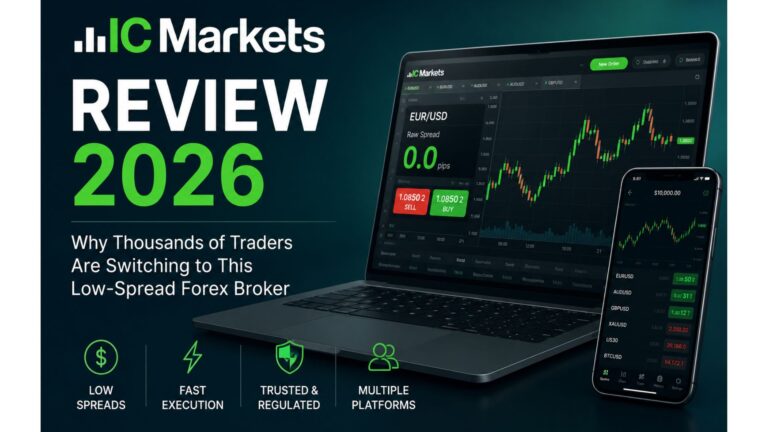
| Typical EUR/USD Spread | From 0.0 pips | From 0.6 to 0.8 pips |
| Commission | $3.50 per side / $7.00 round turn per lot | Zero Commission |
| Ideal Target User | Scalpers, Day Traders, and Algo Builders | Beginners and Swing Traders |
For high-frequency strategies where catching fractions of a pip dictates the bottom line, the Raw Spread model is mathematically superior. Conversely, discretionary traders who prefer straightforward cost calculations integrated right into the chart prefer the predictable nature of the Standard account.
Supported Platforms (MT4, MT5, cTrader, & TradingView)
Flexibility in software is another hallmark of the ecosystem. Traders are not locked into a proprietary, restrictive terminal:
- MetaTrader 4 & MetaTrader 5 (MT4/MT5): Refined over years of heavy usage, providing robust charting tools, complete Expert Advisor compatibility, and streamlined order entry.
- cTrader: Built specifically for ECN trading, featuring Level II pricing depth, advanced take-profit/stop-loss features, and incredible execution speed.
- TradingView Integration: Modern integration allowing users to connect their accounts directly to the world’s most popular social charting network to execute orders seamlessly.
Weighing the Pros and Cons
No broker is flawless, and an objective review requires looking at both sides of the coin:
Key Advantages
- Spreads starting from 0.0 pips on major pairs.
- Multiple industry-leading platforms (MT4, MT5, cTrader, TradingView).
- Deep liquidity mitigating heavy slippage.
- Fast, frictionless funding and withdrawal processing.
Things to Consider
- Educational resources trail behind dedicated learning academies.
- Raw accounts require active management of separate commission costs.
- Not suited for long-term physical equity investing (purely CFD/Forex focused).
Final Verdict & How to Get Started
If your strategy relies heavily on execution speed, minimal spreads, and absolute platform flexibility, the infrastructure provided here stands as an industry benchmark. It eliminates unnecessary friction points, giving modern participants a clean, professional playing field.
Ready to experience institutional-grade trading conditions firsthand? Explore their complete suite of asset classes and configure your optimal setup today.